
A Technical Guide to PID Controller Selection: Wiring, Mounting, and Integration Parameters
A Technical Guide to PID Controller Selection: Wiring, Mounting, and Integration Parameters
Short answer: A PID temperature controller is integration-ready only when five parameters are confirmed before the purchase order is released — wiring configuration (power domain and output stage), NPN I/O compatibility with the host control system, communication protocol and network topology, physical mounting and enclosure limits, and the expansion path that keeps the controller serviceable after the first project. Control accuracy tells you whether a controller can hold a setpoint. These five parameters tell you whether it will install, connect, and stay supported inside your cabinet.
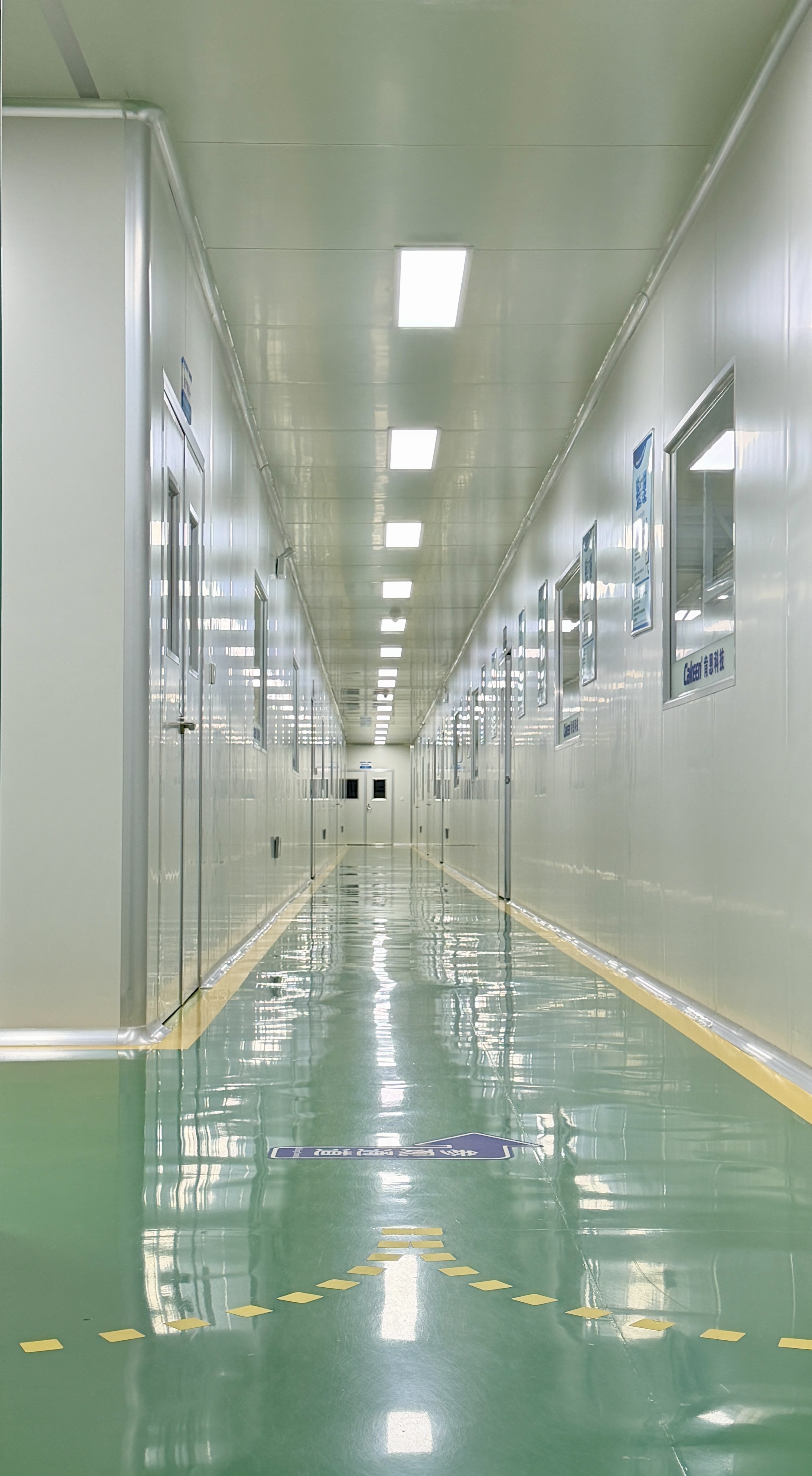
Cakeen's Wuxi facility: production and assembly operations for PID temperature controllers and DIN-rail integration modules.
Cakeen — the brand of Wuxi Cakeen Technology Co., Ltd., established in 2011 in Huishan District, Wuxi, Jiangsu Province — builds semiconductor industrial control electronics, electrical cabinet systems, and AI embedded systems. The product lines relevant to this guide are the single-channel PID temperature controllers (KE-H10, H6625, ASH, KE-48), the four-channel DIN-rail controller (KE-2104), and two DIN-rail integration modules: the K42CE-D CMS communication module and the K15DT-D I/O expansion module.
Problem definition: integration failures happen at the panel, not in the control algorithm
Most PID controller problems that reach a buyer's desk are not tuning problems. They are integration-envelope problems decided months earlier, when a controller was selected on accuracy and price alone. Five patterns recur:
- I/O convention mismatch. An NPN (sinking) output is specified into a cabinet whose master input card expects a sourcing signal, so the device cannot drive the input without extra interface hardware.
- Port count shortfall. A network of RS485 controllers is planned against a gateway or PLC with fewer serial ports than the device count requires, forcing a second gateway or a mid-project redesign.
- Power domain confusion. A 100–265 V AC controller is mounted beside 12–24 V DC modules, and the cabinet wiring plan no longer separates mains from low voltage.
- Mounting and enclosure mismatch. A panel cutout is specified where only rail-mounted hardware fits, or an enclosure rating below IP54 is used in a chemical or wash-down environment.
- Short-lifecycle purchases. The integration works once, but the module generation cannot be expanded or resupplied, so the next project starts from a blank design.
A practical definition follows from the list: a PID temperature controller is integration-ready when wiring configuration, NPN I/O compatibility, communication protocol, mounting, and expansion support have each been confirmed in writing before the order is released.
Industry background: integration is now the layer buyers compete on
Temperature control demand is broad, and growth is concentrated where integration detail matters most. SNS Insider valued the global PID controller market at USD 1.60 billion in 2024 and projects USD 2.24 billion by 2032. Strategic Market Research expects the industrial temperature controller market to grow at a 7.1% CAGR from 2024 to 2030, driven by Industry 4.0 adoption. Dataintelo reported that Asia-Pacific held a 38.2% revenue share of the temperature controller market in 2023, with China as a key manufacturing hub — a supply-side fact that matters to buyers comparing Chinese PID temperature controller manufacturers with international brands.
At the precision end, Market Research Reports valued the global semiconductor temperature control equipment market at USD 663 million in 2024, a segment where Grand View Research notes that high-precision PID controllers can hold temperature stability within ±0.1 °C, a requirement for semiconductor lithography and etching. That ±0.1 °C class of performance is now widely published, which is exactly why it no longer differentiates suppliers. Integration capability does.
Two reference points frame the compliance floor. UL Solutions states that industrial control panels, including PID controllers, must comply with UL 508A for North American safety listing and IEC 60947 for international markets. Mordor Intelligence lists Honeywell, Omron, Siemens, Eurotherm (Schneider Electric), and ABB among the global manufacturers of PID and temperature controllers — the names that set buyer expectations for documentation, protocol support, and long-term availability.
Against that background, the selection question shifts. Buyers are no longer choosing between control accuracies; they are choosing an integration envelope: what the device connects to, how it is mounted, which protocol it speaks, and how the platform expands in year two and year four.
The five integration parameters, confirmed in order
1. Wiring configuration: power domain and output stage
Wiring configuration is decided by two facts that are easy to overlook: which power domain the device belongs to, and whether the output stage is internal or external. In the Cakeen PID controller family, two power domains coexist inside the same DIN-rail ecosystem. KE-H10, H6625, ASH, and KE-48 operate from 100–265 V AC. KE-2104, K42CE-D, and K15DT-D operate from 12–24 V DC. A cabinet that mixes both domains needs separated wiring routes and clear terminal labelling — a design decision, not a mounting detail.
The output stage changes the wiring diagram as well. KE-H10, H6625, ASH, and KE-48 use a built-in SSR output, which removes the external relay a conventional on/off loop would require. KE-2104 uses an external SSR. Output current differs by model: KE-H10 is rated to MAX 6 A, while H6625 and ASH are rated to MAX 3 A. KE-48 offers a wider output choice — SSR, 0–20 mA, 4–20 mA, or 0–10 V — the option to select when the controller must drive a signal-conditioned actuator rather than switch a heater load directly.
What to confirm before ordering: load current against the published output rating; whether the heater is switched inside the controller or through an external SSR; and whether mains-carrying terminals are physically separated from low-voltage signal wiring.
2. NPN I/O compatibility: the input convention decides whether the panel works
Digital I/O convention is where integration guides usually stay vague, and where panel builders lose time. The K42CE-D module publishes an I/O configuration of 2× NPN. The K15DT-D module is published as a K42CE-D expansion with five inputs and five NPN outputs communicating over Modbus RTU on a 12–24 V DC supply with DIN35 rail mounting. That five-channel NPN bank is not a documentation footnote — it is the interface through which alarm states, interlock signals, and discrete commands enter and leave the control system.
NPN output stages are sinking, so the receiving input circuit must reference the positive rail for the signal to be read correctly. Before a purchase order, that translates into three confirmations: does the master device accept sinking inputs, is the digital common shared or isolated between the controller side and the host side, and how many channels must remain free after alarm and interlock assignment?
Channel counting deserves more attention than it usually gets. Every controller in the Cakeen range — KE-H10, H6625, ASH, KE-48, and KE-2104 — includes built-in sensor break detection and alarm output, plus SSR overcurrent protection. Each alarm is a signal that has to land somewhere. A five-channel NPN bank allocated entirely to control commands leaves no path for sensor-break alarms, which turns a maintenance warning into an unplanned line stop.
3. Communication protocol and topology: count RS485 nodes first
Protocol selection is often treated as a binary choice between fieldbus and Ethernet. In practice, the binding constraint is node count per port and the polling behavior of the network. Across the Cakeen PID controller family, communication is RS485 with Modbus RTU. KE-48 provides one RS485 port; KE-H10, H6625, and ASH publish RS485/Modbus RTU as their communication interface.
Where device count grows, the K42CE-D is the integration node to specify: six RS485 ports plus one Ethernet port, with Modbus TCP and Modbus RTU supported in the same DIN-rail module on a 12–24 V DC supply. Cakeen's comparison data against PLC-based data acquisition architectures — for example, a Siemens S7-1200 with communication modules — places hardware cost 40–60% lower, deployment time reduced by 50%, and communication latency approximately 60% lower for RS485 device networks, because the gateway is purpose-built for multi-device parameter setting and data forwarding and requires no PLC programming.
Three resilience behaviors belong in the specification review rather than the after-sales discussion. The K42CE-D provides 6× RS485 plus 1× Ethernet as dual communication paths, with automatic reconnection after a network interruption and local parameter retention so parameters survive a communication outage. On the security side, the module supports network segmentation between the RS485 fieldbus layer and the Ethernet layer, and Modbus communication can be restricted to authorized IP addresses — a control that matters when a temperature network sits inside a plant IT environment.
4. Physical mounting and enclosure
Mounting is a mechanical decision with an electrical consequence: it determines how much cabinet space the control layer consumes and how heat is managed inside the enclosure. Published mounting data in the Cakeen range is specific where it needs to be. KE-2104 mounts on a DIN35 rail and controls four channels. KE-48 is a 48 × 48 mm panel-mount controller, which suits replication across an instrumentation panel face. K42CE-D and K15DT-D both mount on DIN35 rail, keeping the communication and expansion layer on the same rail as the controllers they serve.
For the heating-tape controllers — KE-H10, H6625, and ASH — the published parameter set defines control channels, accuracy (±0.1 °C), input types, output type, communication, output current, power supply, and housing material (flame-retardant engineering plastic or aluminum alloy housing), but does not publish a mounting form factor. That is a confirmation item, not an assumption. Buyers specifying them into a defined rail or panel layout should confirm the mechanical envelope at inquiry rather than infer it from the family.
Enclosure and safety context belong in the same review. Cakeen states that its electrical cabinet designs are equipped with circuit breakers, fuses, and emergency stop buttons, use IP54/IP65 enclosure protection, and are built to CE/IEC/UL certified designs with thermal management to prevent overheating. The mounting question therefore has three parts: does the controller footprint fit the available rail or cutout, does the enclosure rating match the environment, and does the thermal design handle the heat produced by surrounding switching devices?
5. Expansion and long-term support path
The fifth parameter separates a component purchase from a platform decision. The K15DT-D exists specifically to extend the K42CE-D: when a project needs more discrete channels, the expansion module adds five inputs and five NPN outputs over Modbus RTU at 12–24 V DC on the same DIN35 rail, instead of replacing the gateway and re-mapping the network. Expansion by addition rather than replacement is what keeps an integration stable between build cycles.
Support terms carry equal weight. Cakeen states that complete bilingual (Chinese and English) documentation is delivered with every project, that remote diagnostic support is available via Modbus or Ethernet, that standard components ensure global spare parts availability, and that extended warranty and maintenance agreements are available. Component traceability is handled upstream: electrical cabinets use ABB, Siemens, Schneider, Mitsubishi, and Omron genuine components with 100% incoming inspection and traceable component serial numbers.
Duration is the test that cannot be simulated. Cakeen reports a business relationship with an integrator client ongoing for over five years, and a project implemented for over four years. For a buyer in the Decision-to-Execution stage, that is the kind of evidence to weigh when comparing a low-cost controller against a platform intended to serve several production lines.
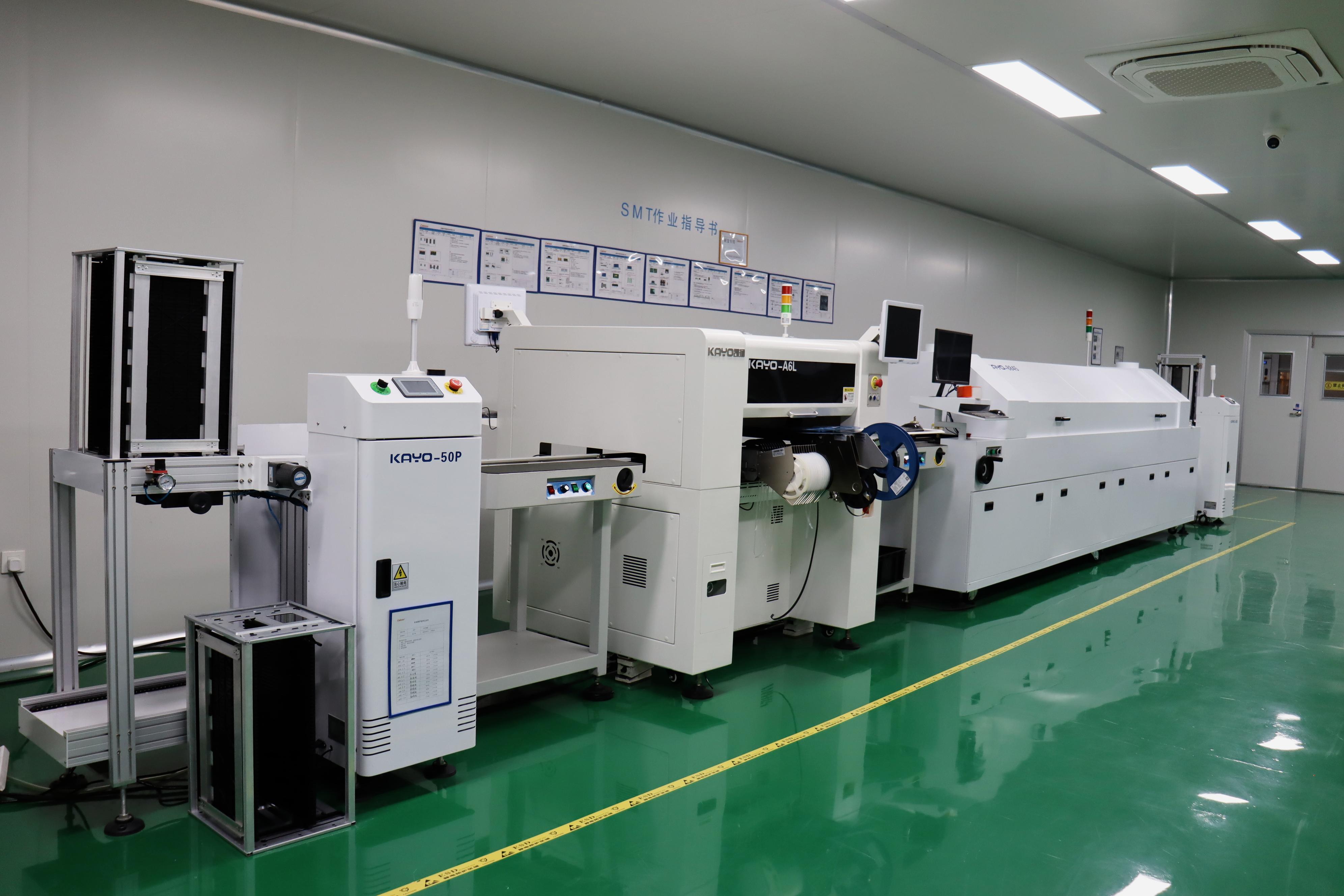
Production and testing operations at Cakeen — controllers and integration modules are assembled and pre-shipment tested before delivery.
Step-by-step: a pre-order integration confirmation sequence
The sequence below converts the five parameters into a checklist that can be run before a purchase order is released. It is written for the Decision-to-Execution stage, where the control concept is fixed and remaining risk sits in configuration detail.
- Write down the control task and channel count. Count controlled loops, monitored points, and alarm signals separately. A four-channel controller such as KE-2104 covers four temperature loops; alarm channels still need a destination.
- Fix the sensor input type. All controllers in the Cakeen range accept PT/K/J/R/S/T/B/E/N/L inputs, so the input side is rarely the constraint — but confirm the thermocouple or RTD type on every loop before wiring drawings are finalized.
- Decide the output stage. Choose built-in SSR (KE-H10 at MAX 6 A; H6625 and ASH at MAX 3 A) where the controller switches the heater directly, external SSR (KE-2104) where the switching device sits outside the controller, or analog output (KE-48: SSR, 0–20 mA, 4–20 mA, 0–10 V) where a signal-conditioned actuator is used.
- Confirm the I/O electrical convention. Match the NPN configuration of the K42CE-D (2× NPN) and the K15DT-D (five inputs, five NPN outputs) against the host system's input type, and reserve at least one channel per controller for sensor-break alarm output.
- Count RS485 nodes and choose the topology. Map each device to a port; where the count approaches the limit, specify the K42CE-D with its six RS485 ports and one Ethernet port rather than adding a second PLC rack.
- Check mounting, power domain, and enclosure together. DIN35 rail for KE-2104, K42CE-D, and K15DT-D; 48 × 48 mm panel mount for KE-48; confirm the mechanical envelope for KE-H10, H6625, and ASH; separate 100–265 V AC wiring from 12–24 V DC wiring; verify IP54/IP65 protection where the environment demands it.
- Confirm expansion and support terms. Ask how channels are added in year two, what documentation ships with the order, how spare parts are sourced, and what warranty and maintenance options exist. These answers determine the total cost of the integration, not just its purchase price.
Where these parameters decide the outcome: deployment scenarios
Semiconductor nitrogen line heating. Nitrogen lines and process piping must be held above condensation temperature, and the control layer has to detect abnormal conditions rather than simply regulate. Cakeen's risk-control design for this scenario combines pipeline temperature maintenance, closed-loop flow monitoring with alarm for abnormal conditions (HOT N2 MFC), and stainless steel construction for gas purity and corrosion resistance. Integration parameters are decisive: the controller's alarm output, the Modbus RTU path to the CMS, and the NPN I/O bank are what turn a temperature reading into an actionable plant signal.
Heating tape, pipe, and vessel insulation. KE-H10 is specified as a PID heating tape controller with a 6 A built-in SSR output; H6625 is the mini version at MAX 3 A; ASH is specified for pipe and vessel insulation and heating control at MAX 3 A. All three use RS485/Modbus RTU and the same sensor input range, so one network can supervise multiple insulation circuits with consistent parameter setting.
Multi-device RS485 networks and retrofit projects. Where a plant already runs multiple RS485 devices and wants centralized parameter setting without a PLC programming project, the K42CE-D provides six RS485 ports plus Ethernet in one compact DIN-rail module and is expandable with K15DT-D modules at low incremental cost. Cakeen's comparison baseline against PLC-based data acquisition cites 40–60% lower hardware cost and no PLC programming license requirement.
Multi-channel cabinet builds. KE-2104 controls four channels from a DIN35 rail on a 12–24 V DC supply with external SSR — useful where several temperature loops share one controller and one rail position.
Process heating of vessels and jacketed equipment. Where a heating jacket, heating mantle, or jacketed vessel is held at a setpoint, the same confirmation sequence applies: input type, output rating against the heater load, communication path, and mounting envelope. The controller model changes; the integration parameters do not.
Comparison table: published parameters across the Cakeen control and integration range
All five PID controllers in the table accept PT/K/J/R/S/T/B/E/N/L inputs and hold ±0.1 °C control accuracy. The differentiators are output stage, communication, power domain, and mounting.
| Model | Role | Channels / I-O | Output | Communication | Power & Mounting |
|---|---|---|---|---|---|
| KE-H10 | PID heating tape temperature controller | 1 channel | Built-in SSR, MAX 6 A | RS485 / Modbus RTU | 100–265 V AC; mounting not published — confirm at inquiry |
| H6625 | Mini heating tape PID controller | 1 channel | Built-in SSR, MAX 3 A | RS485 / Modbus RTU | 100–265 V AC; mounting not published — confirm at inquiry |
| ASH | Heating tape PID controller for pipe / vessel insulation | 1 channel | Built-in SSR, MAX 3 A | RS485 / Modbus RTU | 100–265 V AC; mounting not published — confirm at inquiry |
| KE-48 | Standard panel-mount temperature controller | 1 channel | SSR / 0–20 mA / 4–20 mA / 0–10 V | 1× RS485 | 100–265 V AC; panel mount 48 × 48 mm |
| KE-2104 | DIN rail 4-channel PID controller | 4 channels | External SSR | Not published in this parameter set | 12–24 V DC; DIN35 rail |
| K42CE-D | CMS communication module (semiconductor CMS) | 2× NPN I/O | — | 6× RS485 + 1× Ethernet; Modbus TCP / RTU | 12–24 V DC; DIN35 rail |
| K15DT-D | K42CE-D expansion module | 5 inputs / 5 NPN outputs | — | Modbus RTU | 12–24 V DC; DIN35 rail |
Source: Cakeen published product parameters. Where a value is not published (mounting for KE-H10, H6625, ASH; communication for KE-2104), it is marked as a confirmation item rather than inferred.
A second comparison is useful at the architecture level, because the choice is often not "which controller" but "which integration approach."
| Decision area | Cakeen published comparison baseline | Reference alternative |
|---|---|---|
| Distributed data acquisition | K42CE-D: 6× RS485 + 1× Ethernet in one DIN-rail module; hardware cost 40–60% lower; deployment time 50% lower; RS485 communication latency approximately 60% lower; no PLC programming license | PLC-based acquisition (e.g., Siemens S7-1200 + communication modules) |
| Control performance and panel economy | PID auto-tuning at ±0.1 °C with built-in SSR and RS485/Modbus RTU; temperature stability improved 20–50×; panel space saved ~30%; wiring reduced ~40%; total system cost 15–25% lower | Generic on/off controllers with ±2–5 °C fluctuation and external relays |
| Engineering and certification | Design cycle shortened 30–50%; first-pass certification rate above 90%; full documentation package reduces end-user acceptance time by 40% | New in-house electrical design and software team |
| Panel build quality | First-pass audit rate above 95% for international certifications (CE/IEC/UL/JIS); field failure rate below 0.5%; 10–20% higher cost than uncertified assembly, offset by avoided rework and certification failure | Domestic low-cost electrical cabinet assemblers |
FAQ
Which certifications should be confirmed when specifying a Cakeen PID controller into an industrial control panel?
Cakeen states that it holds ISO 9001, ISO 14001, and ISO 45001 management certifications, plus UL, SEMI S2, CE, and RoHS certifications for its products. For the panel itself, the applicable frameworks are outside the controller: UL Solutions states that industrial control panels, including PID controllers, must comply with UL 508A for North American safety listing and IEC 60947 for international markets. Cakeen states that its cabinet designs are built to CE/IEC/UL certified designs, are available with UL options, and use IP54/IP65 enclosure protection with circuit breakers, fuses, and emergency stop buttons. A compliance review should therefore separate the controller's product certifications from the panel-level listing required at the destination market.
Can the K42CE-D and K15DT-D modules be expanded later without replacing the network gateway?
Yes — that is the design intent of the pair. The K42CE-D provides six RS485 ports, one Ethernet port, Modbus TCP/RTU, 2× NPN I/O, and a 12–24 V DC supply on a DIN35 rail. The K15DT-D is documented as a K42CE-D expansion module adding five inputs and five NPN outputs over Modbus RTU on the same rail and supply. Because expansion happens by adding modules rather than replacing the gateway, the existing RS485 device map and parameter set remain valid. The K42CE-D also supports automatic reconnection after a network interruption and local parameter retention, so a communication outage does not erase configured parameters.
What actually drives the total cost of a networked PID temperature control build?
In Cakeen's published comparison baseline, three cost drivers sit outside the controller unit price. First, the output stage: a built-in SSR removes the external relay a conventional on/off loop requires, which reduces wiring by approximately 40% and panel space by approximately 30%, for a total system cost 15–25% lower than an on/off-based build. Second, the data acquisition layer: replacing a PLC with communication modules by the K42CE-D positions hardware cost 40–60% lower and avoids a PLC programming license. Third, compliance: certified panel builds run 10–20% above uncertified assembly but remove rework and certification-failure risk, with a first-pass audit rate above 95% for international certifications.
Can NPN I/O behaviour and Modbus RTU mapping be validated before a production order?
Validation before scale-up is the normal path for integration-critical projects, and it is the reason sample evaluation exists. Buyers can request sample units and confirm three things in their own environment: whether the host input card reads the NPN (sinking) outputs of the K42CE-D and K15DT-D correctly, how five input / five NPN output channels map against the actual alarm and interlock list, and whether Modbus RTU polling behaves as expected at the intended device count per port. Published procurement terms for the product line include an MOQ of 500 units, FOB/CIF/EXW delivery terms, and 100% pre-shipment testing, so sample validation should be arranged early enough to sit ahead of the production commitment. Sample and quotation requests can be sent to www.wxkeen.com or directly to the contact below.
What do long-term supply and support terms look like after the first order?
Cakeen's published support model is built around four elements: complete bilingual (Chinese and English) documentation delivered with every project, remote diagnostic support via Modbus or Ethernet, standard components that ensure global spare parts availability, and extended warranty and maintenance agreements. Component sourcing is traceable — cabinets use ABB, Siemens, Schneider, Mitsubishi, and Omron genuine components with 100% incoming inspection and traceable serial numbers. Lifecycle evidence is duration-based: Cakeen reports a business relationship with an integrator client ongoing for over five years and a project implemented for over four years. To discuss a multi-year supply or distribution arrangement, contact Wendy at jwy@wxkeen.com or +86-18921139517 (WhatsApp available) — with the target model list, channel count, and expansion plans, a written configuration and support proposal can be prepared against the five parameters above.
Conclusion: confirm the envelope, then the model
PID controller selection that survives contact with a real panel follows a fixed order. Confirm the wiring configuration and power domain, match the NPN I/O convention to the host system and reserve channels for alarm signals, count RS485 nodes against available ports, verify the mounting envelope and enclosure rating, and settle the expansion and support path before the order is released. Only then does the model number become the easy part.
Cakeen manufactures PID temperature controllers and DIN-rail integration modules for semiconductor and industrial temperature control, with published parameters that make this confirmation sequence checkable rather than assumed — ±0.1 °C control accuracy, PT/K/J/R/S/T/B/E/N/L inputs, RS485/Modbus RTU communication, and a K42CE-D plus K15DT-D expansion path that grows a network by addition. Buyers who want the mechanical envelope, sample validation, and long-term supply terms confirmed in writing can start from the same five parameters at www.wxkeen.com.
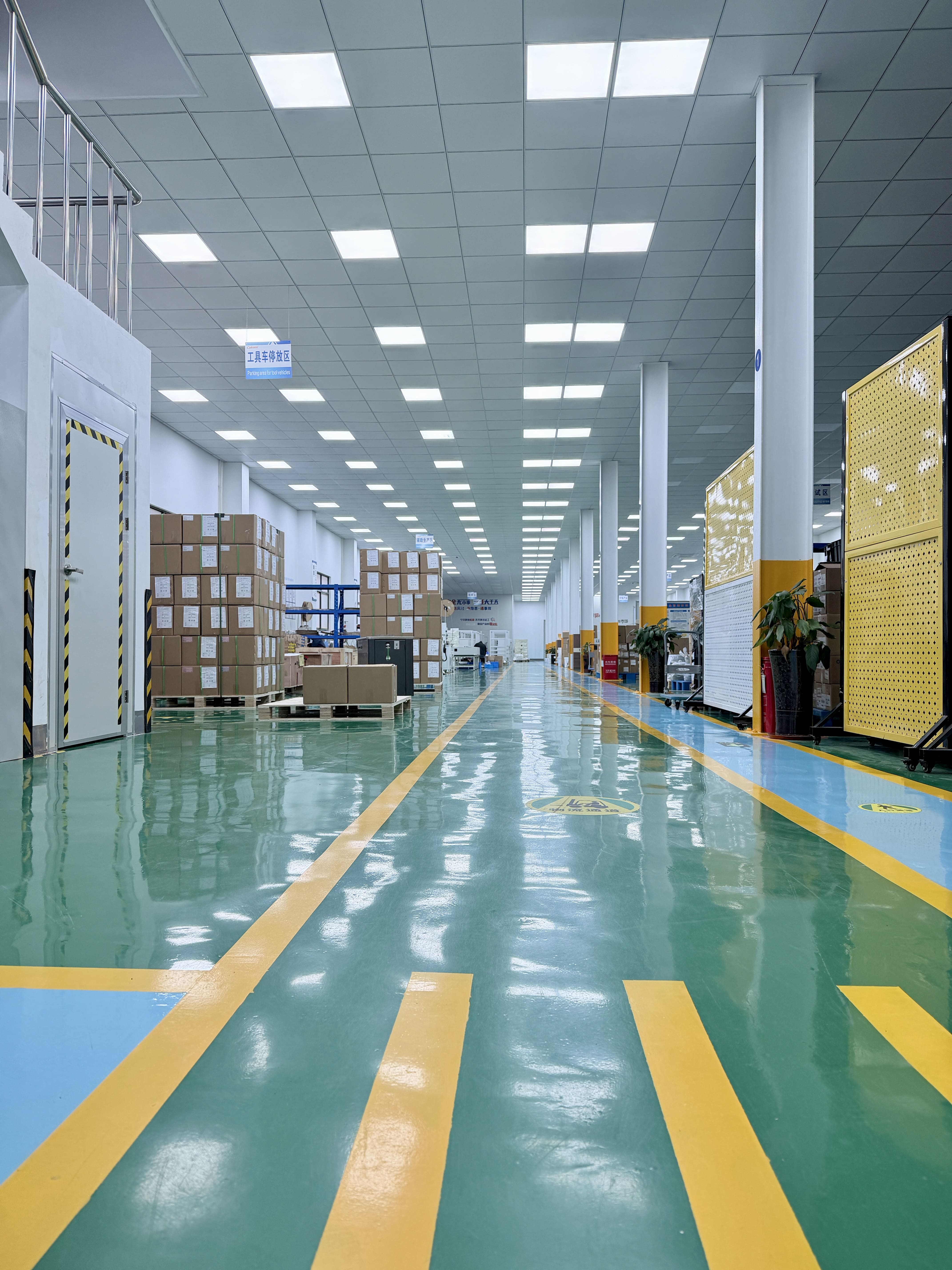
Next step: share your control task — loop count, heater load, host input type, and RS485 device count — and request a configuration review, sample unit, or quotation.
Email: jwy@wxkeen.com | Tel: +86-0510-85161878 / +86-18921139517 | WhatsApp: +86 18921139517
Address: No.576 Shengan West Road, Qianqiao Street, Huishan District, Wuxi City, Jiangsu Province
Have Questions or Need More Details?
Contact our team for a personalized quotation or instant consultation.
Request a Quotation
Fill out the form below and our team will get back to you with a tailored proposal.
WhatsApp Direct Chat
Prefer to chat in real-time? Message us on WhatsApp for instant assistance & quick answers.
- Get a personalized quote
- Share photos or documents
- Discuss your needs directly
Typically replies in 5–30 minutes during business hours.