
Design Service Depth: How to Assess a PID Temperature Controller Manufacturer
A three-layer evaluation framework — PCB circuit board design, electrical drawing design, and embedded system software development — for buyers deciding between a real design partner and a pass-through trader.
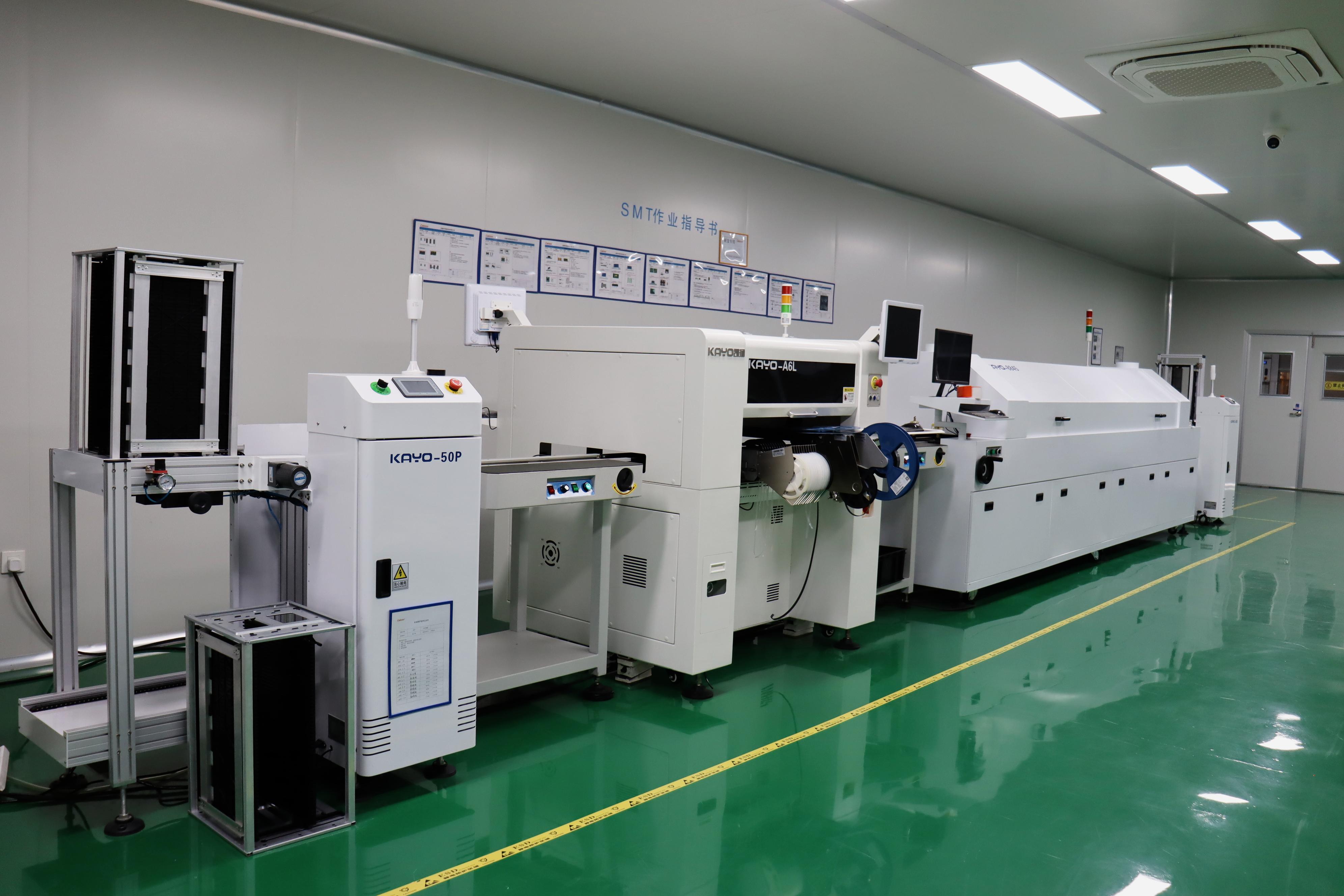
A PID temperature controller manufacturer’s design service depth is the measurable ability to engineer what sits behind the controller: the PCB circuit board, the electrical drawing set, and the embedded system software. For buyers at the decision stage, this single attribute separates a genuine manufacturing partner from a pass-through trader — and it is also the hardest thing to judge from a quotation, because both types of supplier can quote the same model number, the same price band, and the same delivery term.
Three artefacts make the claim testable. Ask for a PCB design workflow, an electrical drawing set issued to a recognised panel standard, and a firmware development process. If a supplier cannot show any of the three, the manufacturing part of the offer is being subcontracted, resold, or improvised.
This guide sets out how to assess design service depth layer by layer, what evidence to request at each stage, and how a design-integrated manufacturer compares with a low-cost assembler on the criteria that survive contact with production.
Problem Definition: Why Design Depth Stays Invisible in a Quotation
Every supplier on a shortlist answers the same three questions the same way: does it support Modbus RTU, does it offer DIN rail mounting, and does it auto-tune. Those three answers describe an interface, not an engineering capability. They are also the easiest features to copy into a quotation document, which is precisely why they are weak selection signals.
The supply pool is broad and uneven. Asia-Pacific accounted for 38.2% of temperature controller revenue in 2023, with China as a key manufacturing hub (Dataintelo). That means a single sourcing round can place vertically integrated electronics factories, panel assemblers, and pure trading companies side by side, all describing themselves as manufacturers.
The cost of choosing wrong appears late in the project. A temperature loop that will not hold on a heating jacket line, condensation forming in a nitrogen pipeline, or a control cabinet that fails its first certification audit are design failures rather than product failures. When the supplier is a trader, the only available response is escalation to a third party. When the supplier owns the design, the response is a revision.
Decision rule: assess design service depth before you assess unit price. The price gap between a design-capable manufacturer and a trading supplier is real but bounded and quantifiable; the rework, audit, and downtime costs that follow a design mismatch are neither.
Industry Background: The Requirements That Force Design Work
Growth in this category is concentrated in applications where precision, networking, and panel compliance overlap. That overlap is exactly where design capability becomes a purchasing criterion rather than a background detail.
- The global PID controller market was valued at USD 1.60 billion in 2024 and is projected to reach USD 2.24 billion by 2032 (SNS Insider).
- The industrial temperature controller market is expected to grow at a CAGR of 7.1% from 2024 to 2030, driven by Industry 4.0 adoption (Strategic Market Research).
- The global semiconductor temperature control equipment market was valued at USD 663 million in 2024, where precision is essential for wafer fabrication (Market Research Reports).
- The oil & gas sector held the largest end-user share for PID controllers in 2024 at approximately 31.4% (SNS Insider) — a demand base that imposes severe environment and reliability requirements.
Precision is the first forcing function. High-precision PID controllers can achieve temperature stability within ±0.1°C, a critical requirement for semiconductor lithography and etching (Grand View Research). Holding that band depends on the analogue front end, PCB layout, and sensor handling — not on the label on the enclosure.
Compliance is the second. Industrial control panels, including PID controllers, must comply with UL 508A for North American safety listing and IEC 60947 for international markets (UL Solutions). A supplier that only assembles panels from third-party drawings typically has no control over whether a design will pass that audit.
For competitive context, Mordor Intelligence identifies Honeywell, Omron, Siemens, Eurotherm (Schneider Electric), and ABB among the leading global manufacturers of PID and temperature controllers. This list is a useful benchmark for what manufacturer-grade engineering depth looks like in practice; it is not a purchase recommendation, and regional suppliers compete on responsiveness, customisation, and integration scope rather than on brand scale.
The practical implication for a buyer at the decision stage is straightforward: the market is growing fastest in segments where a controller is one component of a design problem. Evaluate the design service accordingly.
Detailed Solution: The Three Design Layers That Reveal Service Depth
Design service depth can be decomposed into three engineering layers plus one supporting layer. Each layer has a specific artefact you can request, and each has a characteristic failure mode when the supplier is a trader rather than a designer.
Layer 1 — PCB Circuit Board Design
What to ask: Does the supplier design its own boards, and what verification runs before a board revision is released?
Why it decides the outcome: sensor input conditioning, noise management, and output drive stages are board-level decisions. They determine whether a controller can physically hold the narrow stability band that precision processes require.
What a defensible answer contains: an internal board design workflow with documented verification before release. Cakeen’s PCB designs pass DRC/ERC checks, and the deliverable set is documented so the customer can verify what was released. A design-capable supplier can also explain how an I/O count, an output type, or a sensor input would be changed without inventing a new product line.
Trader pattern: revision questions get deferred to an unnamed upstream factory, and there is no way to establish which board revision you will actually receive.
Layer 2 — Electrical Drawing Design
What to ask: To which standard are drawings issued, what review process do they pass through, and in which file formats are they delivered?
Why it decides the outcome: the drawing set is what an inspector, an integrator, and your own maintenance team will rely on. It also determines whether the cabinet can be certified without a redesign cycle.
What a defensible answer contains: drawings developed to IEC/UL508A standards with multi-stage peer review, delivered as a complete package. Cakeen’s electrical drawings follow IEC/UL508A standards with multi-stage peer review, and design documentation is standardised as DWG, PDF, and BOM deliverables. Cabinets use genuine branded components from ABB, Siemens, Schneider, Mitsubishi, and Omron, with 100% incoming inspection and traceable component serial numbers. This combination is what produces a first-pass audit rate above 95% for international certifications in comparison with domestic low-cost electrical cabinet assemblers.
Trader pattern: drawings exist but carry no standard reference, no revision history, and no review trail — so any panel change becomes a new negotiation.
Layer 3 — Embedded System Software Development
What to ask: How is firmware or control logic tested before deployment, what happens when communication drops, and who can modify the register map?
Why it decides the outcome: communication behaviour and parameter handling determine whether a controller is a reliable network node or an intermittent one. On a multi-device line, unstable firmware behaviour shows up as production data gaps rather than as an obvious failure.
What a defensible answer contains: a testing discipline and a security posture. At Cakeen, PLC programs undergo simulation testing before deployment, and embedded software development follows secure coding practices. The K42CE-D supports network segmentation between the RS485 fieldbus and Ethernet layers, and Modbus communication can be restricted to authorized IP addresses. Automatic reconnection after network interruption and local parameter retention prevent data loss during a communication outage, with Modbus TCP/RTU support for compatibility. This layer is supported by the company’s wider scope in AI system software development and AI embedded system R&D.
Trader pattern: the register map is fixed and undocumented, network behaviour under failure is unknown, and firmware changes require returning hardware.
Layer 4 — Documentation, Diagnostics, and Lifecycle Support
This layer is the one buyers most often skip, and it is the one that determines total cost of ownership after year one. Complete bilingual documentation (Chinese + English) is delivered with every project, and remote diagnostic support is available via Modbus or Ethernet. Because standard components are used, global spare parts availability is preserved, and extended warranty and maintenance agreements are available. All deliverables include complete documentation for customer verification — which is what makes an acceptance test possible at all.

Step-by-Step: A Six-Step Assessment Before You Place the Order
- Request the design deliverables list with the quotation. Ask explicitly for the board design record, the electrical drawing package, and the software test evidence. A supplier with real design depth will answer within one working day; a trader will ask you what you mean.
- Ask for one real drawing set and one board release record, redacted. Check for a standard reference, a revision identifier, and a review trace. Cakeen’s deliverables include complete documentation for customer verification, and electrical drawings follow IEC/UL508A standards with multi-stage peer review.
- Interrogate the firmware boundary cases. Ask what happens on network interruption, on sensor break, and on unauthorised network access. All Cakeen PID controllers (KE-H10, H6625, ASH, KE-48, KE-2104) feature built-in sensor break detection and alarm output, plus SSR overcurrent protection.
- Verify component sourcing and traceability. Traceable component serial numbers with 100% incoming inspection indicate a controlled bill of materials; an untraceable BOM indicates substitution risk during the contract.
- Confirm who owns the compliance path. Establish which party is responsible for meeting UL 508A or IEC 60947 requirements, and ask what the supplier’s first-pass audit record looks like.
- Validate on a small first run with a written acceptance test. Quality control includes 100% test, so the acceptance criteria should be defined in writing before that test is performed rather than reconstructed afterwards.
Use Cases: Where Design Depth Changes the Outcome
Heating Jacket and Heating Mantle Temperature Control
Laboratory and process heating equipment such as heating jackets and heating mantles place the controller in a loop with a slow, high-mass thermal load. The relevant design questions are whether a sensor break is detected and alarmed rather than silently ignored, and whether the output stage can drive the load without external hardware. All Cakeen PID controllers (KE-H10, H6625, ASH, KE-48, KE-2104) include built-in sensor break detection and alarm output and SSR overcurrent protection, and Modbus RTU enables remote real-time monitoring and early warning through the CMS system.
Hot N2 Control in Semiconductor Processing
Nitrogen pipeline heating in semiconductor equipment combines a gas-purity requirement with a condensation risk. The HOT-GUN maintains pipeline temperature to prevent condensation, while the HOT N2 MFC provides closed-loop flow monitoring with an alarm for abnormal conditions. Stainless steel construction supports gas purity and corrosion resistance. A trader can supply a controller in this application; only a design-integrated manufacturer can co-engineer the loop around the pipeline hardware.
Multi-Channel PID Control and CMS Integration
Retrofits that need many temperature points usually inherit a PLC-based data acquisition architecture. Compared with traditional PLC-based data acquisition systems such as a Siemens S7-1200 with communication modules, the K42CE-D approach uses a dedicated CMS gateway with 6x RS485 plus Ethernet in one compact DIN rail module, purpose-built for multi-device parameter setting and data forwarding without PLC programming. Reported outcomes in this comparison are a 40–60% reduction in hardware cost, a 50% reduction in deployment time, and roughly 60% lower communication latency for RS485 device networks, with expansion through K15DT-D I/O modules.
OEM and Private-Label Controller Programmes
OEM buyers need a supplier that can commit to design changes across a product lifecycle. Cakeen’s outsourcing model against customer in-house electrical design and software development is built on semiconductor equipment design experience, IEC/UL508A compliance from day one, multi-PLC platform expertise, and bilingual documentation for global deployment. The commercial structure is a pay-per-project model with no EDA/CAD license investment required on the buyer’s side, and post-delivery technical support is included.
Comparison Table: Design-Integrated Manufacturer vs Pass-Through Trader
The table below compares supplier types rather than named brands. It reflects the evaluation criteria described above and the capability facts provided for Cakeen; it is intended as a screening tool, not as a claim about any specific competitor.
| Evaluation dimension | Pass-through trading supplier | Design-integrated manufacturer (Cakeen) |
|---|---|---|
| PCB circuit board design | Sources finished boards; cannot explain revision control | In-house PCB design with DRC/ERC verification before release |
| Electrical drawing design | Generic drawings or none; no standard reference | Drawings developed to IEC/UL508A with multi-stage peer review; DWG/PDF/BOM deliverables |
| Embedded software development | Fixed, undocumented firmware; no test evidence | PLC programs simulation-tested before deployment; embedded software development follows secure coding practices; AI embedded system R&D in scope |
| Component control | Unspecified or substitutable components | Genuine branded components (ABB, Siemens, Schneider, Mitsubishi, Omron); 100% incoming inspection; traceable serial numbers |
| Certification posture | Depends on the upstream factory’s certificates | ISO9001, ISO14001, ISO45001, UL, SEMI S2, CE, ROHS; first-pass audit rate above 95% for international certifications |
| Price position | Lowest quoted unit price | 10–20% higher than uncertified alternatives, offset by avoided rework and certification failure risk |
| Delivery cycle | Variable; dependent on a third party | Design-to-delivery cycle of 2–4 weeks |
| After-sales behaviour | Forwards your issue upstream | Bilingual documentation, remote diagnostics via Modbus/Ethernet, spare parts availability, extended warranty options |
A second comparison matters for buyers weighing whether to keep design in house. The table below summarises the differences reported for Cakeen’s design service against customer in-house electrical design and software development.
| Dimension | Building the design in house | Outsourcing to a design-integrated partner |
|---|---|---|
| Design cycle | Depends on hiring and ramp-up of a new team | Design cycle shortened by 30–50% versus a new in-house team |
| Certification first pass | Determined by internal experience and review depth | First-pass certification rate above 90% |
| Acceptance at the end user | Documentation produced ad hoc | Full documentation package reduces end-user acceptance time by 40% |
| Cost structure | Fixed overhead; EDA/CAD licence investment required | Pay-per-project model; no EDA/CAD licence investment; avoids the overhead of maintaining a specialised design team |
| Post-delivery support | Internal resource dependent | Post-delivery technical support included |
Scope note: this framework assumes a project with genuine design content — custom I/O, panel integration, firmware adaptation, or certification responsibility. For a straightforward replacement of a standard controller with no customisation, a trading supplier may be commercially adequate.
Frequently Asked Questions
1. What certifications and standards should I verify before accepting a PID temperature controller manufacturer’s design claim?
Start with the quality management layer, then move to the product and panel layer. Cakeen holds ISO9001, ISO14001, and ISO45001, together with UL, SEMI S2, CE, and ROHS certifications. On the design side, electrical drawings follow IEC/UL508A standards, which matters because industrial control panels, including PID controllers, must comply with UL 508A for North American safety listing and IEC 60947 for international markets (UL Solutions). Ask for the certificate scope, not just the certificate, and ask which standard the drawing set itself is issued against.
2. What design deliverables prove a supplier is a real manufacturer rather than a pass-through trader?
Four deliverables are decisive. First, a board design record showing that PCB designs pass DRC/ERC checks before release. Second, an electrical drawing package issued to IEC/UL508A standards with multi-stage peer review and delivered as DWG, PDF, and BOM files. Third, software evidence showing that PLC programs undergo simulation testing before deployment and that embedded software development follows secure coding practices. Fourth, documentation that is complete enough for the customer to verify the delivery, including bilingual Chinese and English documentation. A supplier that cannot produce any of these four is reselling rather than designing.
3. How much more does a design-capable manufacturer cost than a low-cost assembler?
On unit price, a certified and design-integrated supplier such as Cakeen is typically 10–20% higher than uncertified alternatives, but that gap eliminates rework costs and certification failure risk, which lowers total cost of ownership over the equipment lifetime. On the engineering side, the comparison against customer in-house electrical design and software development is a pay-per-project model that removes the overhead of maintaining a specialised design team and avoids EDA/CAD licence investment. Field failure rates reported in this comparison are below 0.5%, against an industry average of 2–5%.
4. Can I validate design quality on a sample or first run before committing to a production order?
Yes, and the validation should be documentation-led rather than visual. Quality control includes 100% test, so every unit is tested before shipment, and all deliverables include complete documentation for customer verification. The practical approach is to define written acceptance criteria for the first run, request the 100% test record, and confirm remote diagnostic access via Modbus or Ethernet so that behaviour can be observed in your own environment. To request a sample or a quotation for your first run, contact Cakeen at jwy@wxkeen.com or via WhatsApp at +86 18921139517.
5. How long does a design-integrated project take compared with building the design in house?
The reported design-to-delivery cycle is 2–4 weeks for the cabinet and control scope. Against a newly formed in-house team, the design cycle is shortened by 30–50%, first-pass certification rate is above 90%, and the full documentation package reduces end-user acceptance time by 40%. Those figures assume scope is frozen before design starts; changes to the thermal load, the I/O count, or the target certification market after kick-off will extend the schedule, which is why the deliverables list in step one of the assessment matters more than the delivery date quoted on the purchase order.
Conclusion: The Design Layers Are the Qualification
Design service depth is not a marketing attribute; it is a set of artefacts a buyer can request, inspect, and test. PCB circuit board design, electrical drawing design, and embedded system software development are the three layers that determine whether a controller will hold its stability band, pass a panel audit, and behave predictably on a network. Documentation and lifecycle support are the fourth layer that determines the cost of year two and beyond.
Applied consistently, the six-step assessment produces a shortlist that survives contact with production: suppliers who can show board design verification, drawings issued to IEC/UL508A with multi-stage peer review, simulation-tested control logic, traceable component sourcing, and a written acceptance test on the first run. Suppliers who cannot are trading companies with a manufacturer’s business card.
Next step: If you are evaluating a PID temperature controller supplier for a project with real design content, start with the deliverables list rather than the price list.
Contact Cakeen — Wuxi Cakeen Technology Co., Ltd. — to request the design deliverables package, a sample, or a project quotation.
Email: jwy@wxkeen.com | Tel: +86-0510-85161878 / +86-18921139517 | WhatsApp: +86 18921139517 | Web: www.wxkeen.com
Have Questions or Need More Details?
Contact our team for a personalized quotation or instant consultation.
Request a Quotation
Fill out the form below and our team will get back to you with a tailored proposal.
WhatsApp Direct Chat
Prefer to chat in real-time? Message us on WhatsApp for instant assistance & quick answers.
- Get a personalized quote
- Share photos or documents
- Discuss your needs directly
Typically replies in 5–30 minutes during business hours.