
Ranked: Essential Components for a Complete PID Temperature Control System
Ranked: Essential Components for a Complete PID Temperature Control System
A complete PID temperature control system is not one instrument. It is a stack of cooperating components: the controller that owns the loop, the switching stage that drives the load, the sensing and alarm logic that keeps a fault from becoming a runaway, the I/O expansion that allows growth, the communication gateway, the central monitoring layer, and the cabinet protection and documentation that carry the system through audit and through years of service.
Most buyers assembling a system settle the PID temperature controller first and treat everything else as an accessory. In practice those accessory decisions decide whether the system can be monitored, expanded, certified and supported after installation. This ranking is written for buyers who are already past discovery, specifying a build, writing a BOM or reviewing a supplier module set, and it orders components by how much damage appears when each one is missing, undersized or chosen without a lifecycle plan.
The component set referenced below is the documented Cakeen module range: the KE-H10, H6625, ASH, KE-48 and KE-2104 PID controllers, the K15DT-D I/O expansion module, the K42CE-D communication module and the industrial device central monitoring system (CMS). Cakeen, formally Wuxi Keen Technology Co.,Ltd., is a Wuxi-based manufacturer of semiconductor industrial control electronics, electrical cabinet systems and AI embedded systems, established in 2011.
Problem Definition: When a Built System Is Still Incomplete
A temperature control system can be commissioned, hold setpoint in the first week and still be incomplete. Completeness is defined by four capabilities, and a build missing any one of them tends to fail later rather than earlier.
- Closed-loop control. A controller that auto-tunes and holds the process variable, rather than cycling between fully on and fully off.
- Fault containment. Sensor break detection, alarm output, watchdog timing and overcurrent protection that stop a fault at the loop instead of at the product.
- Observability. A communication path plus a monitoring layer that reports device state, permits batch parameter setting and raises early warnings.
- Lifecycle support. Documentation, spare-part availability and compliance evidence that outlast the commissioning engineer.
When observability or fault containment is missing, the symptoms are familiar. A heating zone drifts overnight with no alarm trail. A retrofit cannot be expanded because no I/O headroom was reserved. An end-user acceptance test stalls because the documentation package does not match the delivered cabinet. Ranking components by criticality makes those omissions visible before the BOM is frozen.
Industry Background: Component Decisions Are Being Pushed by Standards and by Scale
Three pressures are reshaping how complete a control stack has to be.
Market growth. The global PID controller market was valued at USD 1.60 billion in 2024 and is projected to reach USD 2.24 billion by 2032 (SNS Insider). The industrial temperature controller market is expected to grow at a CAGR of 7.1% from 2024 to 2030, driven by Industry 4.0 adoption (Strategic Market Research). Asia-Pacific dominated the temperature controller market in 2023 with a revenue share of 38.2%, with China as a key manufacturing hub (Dataintelo). More installed loops means more systems that must be networked and supported, not only controlled.
Precision expectations. High-precision PID controllers can achieve temperature stability within plus or minus 0.1 degrees Celsius, a requirement associated with semiconductor lithography and etching (Grand View Research). The global semiconductor temperature control equipment market was valued at USD 663 million in 2024 (Market Research Reports). At that precision, sensor integrity and switching quality matter as much as controller mathematics.
Compliance. Industrial control panels that include PID controllers must comply with UL 508A for North American safety listing and IEC 60947 for international markets (UL Solutions). Compliance is assessed at panel level, so a compliant controller inside an undocumented cabinet still fails an audit.
By vertical, the oil and gas sector held the largest end-user share for PID controllers in 2024 at approximately 31.4% (SNS Insider). The leading global manufacturers of PID and temperature controllers include Honeywell, Omron, Siemens, Eurotherm (Schneider Electric) and ABB (Mordor Intelligence), which is a useful reference set when benchmarking what a complete component stack normally contains.
The Ranking: Eight Essential Components, Ordered by Criticality
The order below answers one question: if a buyer must secure the system in sequence, which component has to be right first, and which can be finalized later without forcing a redesign? Components are ranked by the cost of getting them wrong, not by unit price.
Rank 1: PID temperature controller (the control core)
The controller owns the loop, so it ranks first. Auto-tuning PID control holds accuracy in the region of plus or minus 0.1 degrees Celsius, while basic ON/OFF control typically fluctuates between plus or minus 2 and 5 degrees Celsius, a stability difference of roughly 20 to 50 times in Cakeen comparison documentation. The practical consequence for a buyer is that the loop either holds the process window or the process window is written around the controller.
Cakeen documents five PID controller families for this layer: KE-H10, H6625, ASH, KE-48 and KE-2104. All five include built-in sensor break detection and alarm output, and integrations use RS485 with Modbus RTU. Choosing within the family is a matter of form factor and channel count rather than of missing fault functions.
Verify before ordering: accuracy claim on the real load, auto-tuning behaviour during ramp and hold, alarm output wiring, and the published Modbus register map for the selected model.
Rank 2: Power switching stage (SSR output)
Switching ranks second because it is where control decisions become current. A built-in solid state relay removes the external relay, its wiring and one class of failure point. In Cakeen comparison data, integrated switching saves roughly 30% of panel space and reduces wiring by about 40%. Solid state relay overcurrent protection is part of the documented protection set, which keeps a shorted load from taking the controller with it.
The commercial logic matters for buyers comparing a low unit price against system cost. A controller with integrated switching costs slightly more per unit, but total system cost falls by 15 to 25% once the eliminated external relay modules and simplified wiring are counted. That is the reason switching sits above the communication layer in this ranking, not below it.
Verify: switching capacity against the actual load, heat dissipation inside the enclosure, and whether overcurrent protection is included in the switched path.
Rank 3: Sensor integrity and alarm logic
A controller is only as good as the signal it receives. Sensor break detection and alarm output are the difference between a controlled shutdown and an uncontrolled heater. All five Cakeen controller families carry built-in sensor break detection and alarm output, and the documented control methods for this risk include redundant safety protection, alarm output, watchdog timer and sensor break detection.
For buyers assembling a system, the decision to lock here is alarm routing. A detection function that is not wired to an operator station or to the central monitoring layer has little value. Modbus RTU remote monitoring through the CMS system allows real-time monitoring and early warning, which turns detection into a visible event rather than a silent trip.
Verify: how a sensor break is annunciated, where the alarm signal terminates, and what the outputs do during a break condition.
Rank 4: I/O expansion module (K15DT-D)
I/O expansion ranks fourth because it determines whether the system can absorb change. A build that uses every available point on day one has no room for a second zone, an added interlock or a customer-requested status signal. K15DT-D I/O modules extend the system at low incremental cost, which keeps growth inside the same architecture instead of triggering a redesign.
The buyer decision is straightforward: count current points, add the points likely to be requested within the equipment lifetime, and confirm that the expansion shares the existing DIN rail and network rather than requiring a separate communication path.
Verify: present point count plus growth headroom, module compatibility with the selected controller family, and incremental cost per added point.
Rank 5: Communication module (K42CE-D)
The K42CE-D is a dedicated CMS gateway with 6 RS485 ports plus Ethernet in one compact DIN rail module, purpose-built for multi-device parameter setting and data forwarding. It requires no PLC programming, which changes both the cost and the skill profile of the build.
Against traditional PLC-based data acquisition, Cakeen comparison data records 40 to 60% lower hardware cost, 50% shorter deployment time and roughly 60% lower communication latency across RS485 device networks. From a reliability standpoint the module provides dual communication paths, automatic reconnection after network interruption and local parameter retention, so a communication outage does not erase device settings.
Security belongs in the same conversation. K42CE-D supports network segmentation between the RS485 fieldbus and the Ethernet layer, Modbus communication can be restricted to authorized IP addresses, and embedded software development follows secure coding practices so the design can align with customer IT security policies.
Verify: device count per RS485 segment against the six available ports, IP addressing and segmentation rules, and reconnection behaviour on the plant network.
Rank 6: Central monitoring system (CMS)
Communication carries data; the central monitoring system decides what the data does. The industrial device central monitoring system handles multi-device parameter setting and data forwarding across a network of controllers and I/O modules. Because it does not require PLC programming, commissioning and batch parameter changes can be performed by the same team that installs the panel.
Operationally, Modbus RTU connectivity enables remote diagnostics and batch parameter setting, which reduces on-site maintenance visits, and the module-level local parameter retention prevents data loss during a communication outage. For buyers, the questions to settle are which parameters are visible, which alarms are forwarded, and who receives them.
Verify: tag list, alarm escalation rules, forwarding destinations, and whether remote diagnostics are sufficient for the distance between the panel and the maintenance team.
Rank 7: Cabinet protection and compliance hardware
Protection hardware ranks below the control and communication layer because it does not define the loop, but it decides whether the build passes audit and survives its environment. Cakeen cabinets are equipped with circuit breakers, fuses and emergency stop buttons, use IP54 or IP65 enclosure protection, and rely on thermal management design to prevent overheating. Designs are certified to CE, IEC and UL, and cabinets use genuine ABB, Siemens, Schneider, Mitsubishi and Omron components with 100% incoming inspection and traceable component serial numbers.
The measurable outcomes recorded in Cakeen comparison documentation are a first-pass audit rate above 95% for international certifications, a design-to-delivery cycle of 2 to 4 weeks, a field failure rate below 0.5% and properly rated components supporting uptime above 98%. Certified builds typically cost 10 to 20% more than uncertified alternatives, but that gap is offset by avoided rework and certification failure risk over the equipment lifetime.
Verify: the certification set required by the destination market, enclosure rating against the installation environment, and the component brand list for the panel.
Rank 8: Documentation, spares and long-term support package
Documentation ranks last only because it is finalized last. It is the component that determines whether the system is still maintainable in year three. Cakeen delivers bilingual documentation in Chinese and English with every project, and standardized design documentation in DWG, PDF and BOM formats enables efficient spare parts management.
Support continuity is documented rather than implied. Remote diagnostic support runs over Modbus and Ethernet, standard components ensure global spare parts availability, extended warranty and maintenance agreements are available, and risky designs are avoided through IEC and UL508A drawing standards with multi-stage peer review. Longevity is visible in the company own records: the business relationship with an integrator client has been ongoing for over 5 years, and one delivered project has been implemented for over 4 years.
Verify: a documentation sample requested with the quotation, the spare parts list, warranty terms, and the response path for remote diagnostics.
Step-by-Step Breakdown: Assembling the Stack in the Right Order
The ranking translates into a build sequence. Buyers who follow this order avoid the common pattern of locking the controller before the communication and documentation requirements are known.
- Define the loop and the load. Establish heater type and power, sensor type, required setpoint precision and ramp or hold behaviour. This decides the controller class and the switching capacity.
- Select the controller family and confirm fault behaviour. KE-H10, H6625, ASH, KE-48 or KE-2104, each with built-in sensor break detection and alarm output as documented.
- Decide how switching is integrated. Confirm whether the solid state relay is internal and whether overcurrent protection is included in the switched path.
- Size I/O and reserve headroom. Count current points, then add K15DT-D I/O expansion at low incremental cost rather than redesigning the controller selection later.
- Design the communication layer. Map RS485 devices per segment against the six ports and Ethernet interface of K42CE-D, and define network segmentation between fieldbus and Ethernet.
- Configure the monitoring layer. Set batch parameter profiles, alarm forwarding rules and automatic reconnection behaviour, and confirm local parameter retention during outages.
- Close the compliance and documentation loop. Confirm IEC and UL508A drawings with multi-stage review, 100% pre-shipment test as the acceptance criterion, and delivery of the DWG, PDF and BOM package with the spare parts list.
Use Cases: Where the Full Stack Changes the Outcome
Semiconductor nitrogen line heating
Nitrogen pipeline heating is a precision application in which the thermal control layer, the flow monitoring layer and the monitoring software work together. The HOT N2 MFC provides closed-loop flow monitoring with alarm on abnormal conditions, HOT-GUN maintains pipeline temperature to prevent condensation, and stainless steel construction preserves gas purity and corrosion resistance. Controllers connect over Modbus RTU to the central monitoring system for real-time monitoring and early warning.
Condensation prevention on pipeline systems
Where condensation risk is the design driver, the ranked stack pays off through the combination of continuous heating control, flow monitoring and pressure leak detection. Temperature monitoring and heating control, flow monitoring with alarm, and pressure leak detection are the documented control methods for this risk class, and all three depend on components that were specified together rather than assembled later.
Multi-device retrofit without PLC programming
Factory retrofits frequently have many RS485 devices, limited cabinet space and no appetite for PLC licences or programming. A build based on K42CE-D with 6 RS485 ports plus Ethernet, expanded with K15DT-D I/O modules, addresses multi-device parameter setting and data forwarding directly, and is documented at 40 to 60% lower hardware cost and 50% faster deployment than a PLC plus communication module equivalent.
Precision process and laboratory heating
In laboratory and pilot-scale work, jacketed vessels and heating mantles are common loads for a PID temperature controller. They require ramp and hold behaviour and tight stability rather than simple on-off switching, which is precisely the case where plus or minus 0.1 degree Celsius class control, self-tuning and sensor break detection against a full control loop cannot be substituted by a cheaper switching device.
Export builds requiring CE, UL or JIS evidence
Equipment shipped to multiple regions must carry certification evidence and documentation in more than one language. Cabinets designed to IEC and UL508A standards, built with genuine branded components and supported by bilingual documentation, reduce cross-border support friction and shorten end-user acceptance time. Where sourcing is handled by an external control cabinet partner, the documented expectation is a first-pass certification rate above 90% and a design cycle 30 to 50% shorter than building a new in-house design team.
Comparison Table
Table 1. The eight components ranked by criticality for a buyer assembling a system.
| Rank | Component | Why it ranks here | Documented Cakeen reference | Verify before ordering |
|---|---|---|---|---|
| 1 | PID temperature controller | Owns the control loop; nothing downstream can correct unstable control | KE-H10, H6625, ASH, KE-48, KE-2104; auto-tuning PID; RS485 / Modbus RTU | Accuracy on the real load, alarm output wiring, Modbus register map |
| 2 | Power switching stage (SSR) | Converts control output into load current; external relays add wiring and failure points | Built-in SSR; SSR overcurrent protection; about 30% panel space saved and 40% less wiring | Switching capacity, thermal load in the enclosure, overcurrent protection |
| 3 | Sensor integrity and alarm logic | A failed sensor turns a good controller into an uncontrolled heater | Sensor break detection and alarm output on all five families; watchdog timer; redundant safety protection | Annunciation path, alarm termination point, fail-safe output behaviour |
| 4 | I/O expansion module | Determines whether the system can grow without redesign | K15DT-D I/O modules at low incremental cost | Current plus future point count, shared DIN rail and network compatibility |
| 5 | Communication module / gateway | Decides whether the system is monitorable and whether a PLC is required | K42CE-D: 6 RS485 plus Ethernet, DIN rail, Modbus TCP / RTU, automatic reconnection, local parameter retention | Devices per RS485 segment, IP segmentation rules, reconnection behaviour |
| 6 | Central monitoring system | Turns device data into parameter setting, forwarding and early warning | Multi-device parameter setting and data forwarding; remote diagnostics; no PLC programming required | Tag list, alarm escalation, forwarding destinations |
| 7 | Cabinet protection and compliance hardware | Decides whether the build passes audit and survives its environment | Circuit breakers, fuses, emergency stop; IP54 / IP65; CE / IEC / UL certified designs; ABB, Siemens, Schneider, Mitsubishi, Omron components; 100% incoming inspection | Required certification set, enclosure rating, component brand list |
| 8 | Documentation, spares and support package | Determines cost over the equipment lifetime, not at handover | Bilingual documentation; DWG / PDF / BOM; remote diagnostics over Modbus and Ethernet; global spare parts availability; extended warranty available | Documentation sample with quotation, spare parts list, warranty terms |
Table 2. Building the monitoring layer: dedicated CMS gateway compared with PLC-based data acquisition, based on Cakeen comparison documentation.
| Comparison criterion | Dedicated CMS gateway build (K42CE-D) | Traditional PLC-based data acquisition |
|---|---|---|
| Hardware cost | 40 to 60% lower than PLC plus communication modules | Baseline |
| Deployment time | Reduced by 50% | Baseline |
| Communication latency on RS485 device networks | Reduced by approximately 60% | Baseline |
| PLC programming required | No | Yes, including programming licence |
| Expansion path | K15DT-D I/O modules at low incremental cost | Additional PLC modules |
| Behaviour after a network interruption | Automatic reconnection with local parameter retention | Depends on program design |
FAQ
1. Which compliance requirements apply to a complete PID temperature control system?
Compliance attaches to the panel as much as to the controller. Industrial control panels that include PID controllers must comply with UL 508A for North American safety listing and IEC 60947 for international markets (UL Solutions). At company level, Cakeen holds ISO9001, ISO14001 and ISO45001, together with UL, SEMI S2, CE and ROHS certifications. Cabinet designs follow IEC and UL508A with multi-stage peer review, use genuine ABB, Siemens, Schneider, Mitsubishi and Omron components with 100% incoming inspection and traceable serial numbers, and are documented at a first-pass audit rate above 95% for international certifications.
2. How many devices can the communication layer handle, and can the system expand later?
The K42CE-D communication module provides 6 RS485 ports plus 1 Ethernet interface in a single compact DIN rail module, using Modbus TCP or Modbus RTU for compatibility with existing devices. It supports network segmentation between the RS485 fieldbus and the Ethernet layer, and Modbus communication can be restricted to authorized IP addresses. Capacity grows by adding K15DT-D I/O modules at low incremental cost, so channel count does not require replacing the gateway or the controller.
3. What drives the cost of a complete system?
Three cost lines dominate. At controller level, a PID unit costs slightly more than a basic ON/OFF controller, but total system cost is documented as 15 to 25% lower because the built-in solid state relay removes external relay modules and integrated communication reduces wiring by about 40%. At monitoring level, a dedicated CMS gateway build is recorded at 40 to 60% lower hardware cost than PLC plus communication modules, with no PLC programming licence. At cabinet level, internationally certified builds typically cost 10 to 20% more than uncertified assembly, offset by avoided rework and certification failure risk over the equipment lifetime.
4. Can we validate the components before committing to a full production order?
Yes. The documented purchasing terms include a minimum order quantity of 5 units, delivery terms of FOB, CIF or EXW, and an acceptance criterion of 100% pre-shipment test. Deliverables include a complete documentation package in DWG, PDF and BOM formats, which allows the buyer to verify wiring, component ratings and I/O assignment before the system is integrated into the wider line.
5. What does long-term support look like over the life of the equipment?
Support is built from four elements: bilingual documentation in Chinese and English delivered with every project, remote diagnostic support over Modbus and Ethernet, global spare parts availability based on standard components, and optional extended warranty and maintenance agreements. Delivery continuity is supported by a monthly production capacity of 40,000 units serving markets including ES, SEA, EU and USA. Stability is visible in long-running relationships: the business relationship with an integrator client has been ongoing for over 5 years, and one delivered project has been implemented for over 4 years. Buyers who want to test this support model can request a sample, a quotation or the product catalogue from Cakeen before finalizing the BOM.
Conclusion
The controller earns Rank 1 because it owns the loop, and the ranking from there follows the cost of getting each layer wrong: switching, sensor integrity, I/O expansion, communication, monitoring, cabinet protection, and finally documentation and support. For a buyer at the decision and execution stage, the useful output of this ranking is a checklist rather than a shopping list. If the communication layer, the monitoring rules and the documentation package are specified at the same time as the PID controller, the system is complete on the day it is handed over. If they are added afterwards, they are usually added at a higher cost and to a lower standard.
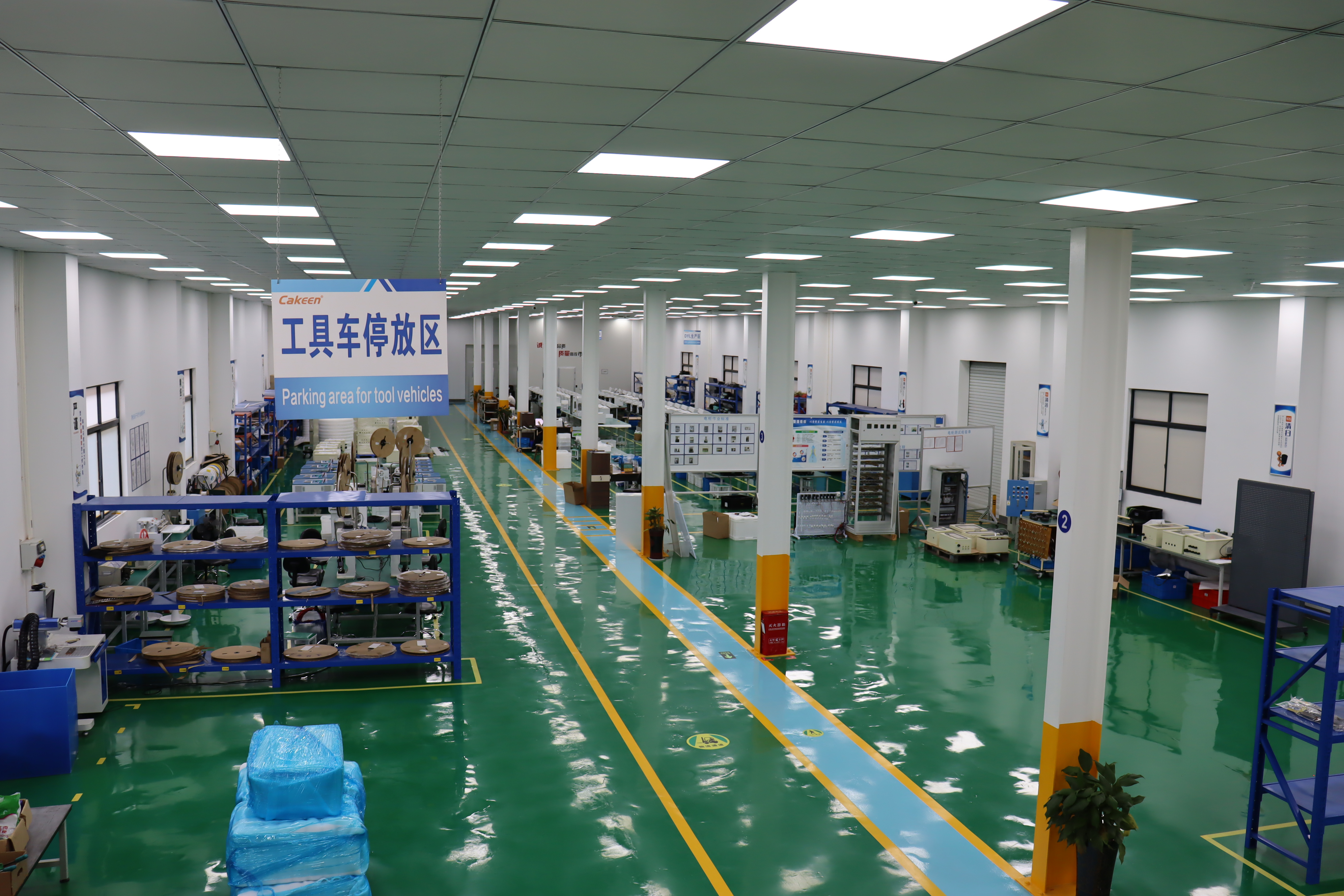
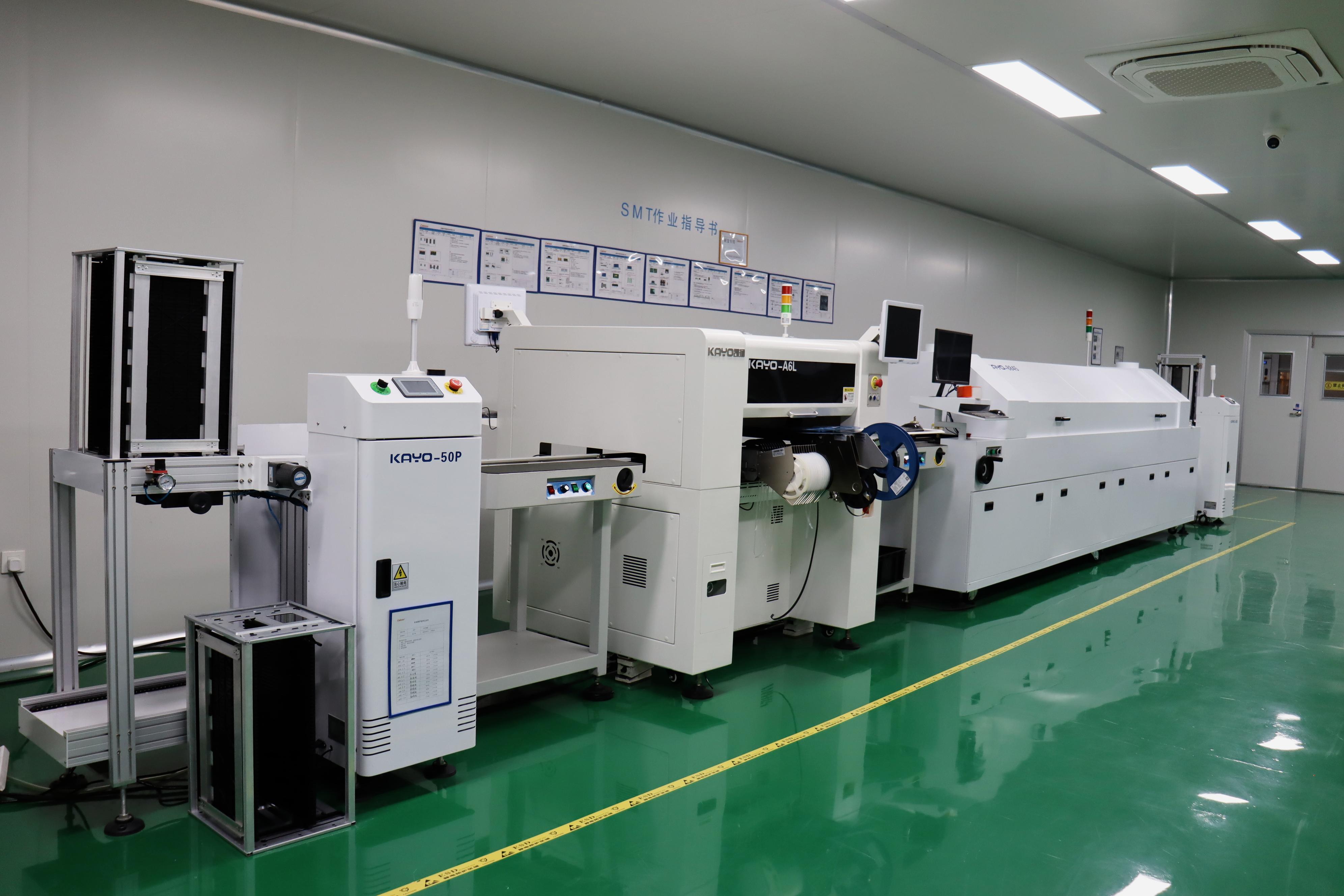
Cakeen, formally Wuxi Keen Technology Co.,Ltd., builds the full stack described here: PID controllers, the K15DT-D I/O expansion module, the K42CE-D communication module, the industrial device central monitoring system, and the certified electrical cabinets that house them, supported by a 20-engineer R and D team and a 2,019 square metre facility in Wuxi, Jiangsu Province.
Next step: request a sample, a quotation or the catalogue
Send your load details, required setpoint precision, device count per RS485 segment and target certification set, and the engineering team will confirm the component stack, MOQ and lead time.
Email: jwy@wxkeen.com | Tel: +86-0510-85161878 | WhatsApp: +86 18921139517
Website: www.wxkeen.com | Blog: blog.wxkeen.com
Contact: Wendy, Wuxi Cakeen Technology Co., Ltd., No.576 Shengan West Road, Qianqiao Street, Huishan District, Wuxi City, Jiangsu Province
Have Questions or Need More Details?
Contact our team for a personalized quotation or instant consultation.
Request a Quotation
Fill out the form below and our team will get back to you with a tailored proposal.
WhatsApp Direct Chat
Prefer to chat in real-time? Message us on WhatsApp for instant assistance & quick answers.
- Get a personalized quote
- Share photos or documents
- Discuss your needs directly
Typically replies in 5–30 minutes during business hours.