
How to Prevent Condensation in Pipeline Nitrogen Systems with PID Control
How to Prevent Condensation in Pipeline Nitrogen Systems with PID Control
Condensation in a pipeline nitrogen system is prevented by holding the whole gas path above the temperature at which residual moisture can condense — and the practical way to hold that condition is closed-loop PID control over trace heating. Cakeen builds the two halves of that loop: the Pipeline Nitrogen Gas Heater (model HOT-GUN), an anti-condensation pipeline N2 heating controller specified at ±1°C control accuracy over a 0~250°C range with a stainless steel and high-temperature alloy gas path, and PID temperature controllers specified at ±0.1°C for the regulation layer. This article explains how such a loop is specified, tuned, monitored and validated so that condensation does not return after commissioning.
Problem Definition: How Condensation Actually Forms in a Nitrogen Pipeline
Nitrogen leaves its source cold. Whether the gas is drawn from a liquid supply through a vaporizer or delivered from compressed cylinders, it enters the distribution tubing at a temperature that is frequently below the ambient air temperature of the fab or plant room. The line itself is usually long, thin-walled and exposed to that same room air.
Condensation then follows two distinct paths, and confusing them is one of the most common mistakes made during troubleshooting.
- External condensation. Humid room air meets a cold tube surface and condenses on the outside of the pipe. The visible result is dripping, wet insulation and, over time, corrosion under insulation.
- Internal condensation. Residual moisture carried in the gas stream condenses on the cooler internal walls of the tube and forms droplets that can be re-entrained into the flow.
The controlling variable is the same in both cases: the local surface temperature relative to the moisture dew point at the local pressure. That makes condensation a thermal problem before it is a filtration problem. A filter removes particles; only heat keeps the line above the threshold at which liquid can form.
Downstream damage is what turns this into a process risk rather than a maintenance annoyance. Liquid carry-over reaching a mass flow controller or a process chamber disturbs gas delivery, contributes particles into the wafer environment and encourages corrosion in the wetted path. In semiconductor thermal processing, where chamber temperature uniformity is already a tightly held parameter, an unstable gas inlet temperature propagates directly into the process result.
Industry Background: Why Gas-Line Thermal Stability Became a Specification Item
Thermal control hardware is a growing slice of industrial spending, and the growth is measurable. The global PID controller market was valued at USD 1.60 billion in 2024 and is projected to reach USD 2.24 billion by 2032, according to SNS Insider. Strategic Market Research estimates that the industrial temperature controller market will grow at a CAGR of 7.1% from 2024 to 2030, driven by Industry 4.0 adoption. Dataintelo reports that Asia-Pacific dominated the temperature controller market in 2023 with a revenue share of 38.2%, with China acting as a key manufacturing hub.
At application level the demand signal is sharper still. The global semiconductor temperature control equipment market was valued at USD 663 million in 2024, a figure that reflects how dependent wafer fabrication is on precision thermal control. Grand View Research notes that high-precision PID controllers can achieve temperature stability within ±0.1°C, a critical requirement for semiconductor lithography and etching.
Compliance expectations run in parallel with performance expectations. Industrial control panels, including PID controllers, must comply with UL 508A for North American safety listing and IEC 60947 for international markets, per UL Solutions. The supplier landscape is mature: leading global manufacturers of PID and temperature controllers include Honeywell, Omron, Siemens, Eurotherm (Schneider Electric) and ABB, according to Mordor Intelligence.
For buyers, the practical consequence is a change in what “anti-condensation” means. It is no longer only an insulation task handed to maintenance. It is a control specification: which loop, which sensor, which switching element, which alarm path, which data record. That specification decision is where nitrogen line reliability is won or lost, and it is the reason the choice of a PID temperature controller manufacturer now sits alongside the choice of the heater itself.
Detailed Solution: PID-Controlled Heating for Pipeline Nitrogen Gas
The countermeasure against condensation is deliberate heating of the gas path combined with closed-loop regulation of that heat. Heating alone is not enough. An uncontrolled heater can overshoot, cycle or drift with ambient conditions, and each of those behaviours changes the gas temperature that the process actually sees. A PID (proportional–integral–derivative) controller performs the measure–compare–correct cycle continuously, which is what separates a stable heated line from a line that merely has a heater installed on it.
The heater side: Cakeen HOT-GUN pipeline nitrogen gas heater
The Pipeline Nitrogen Gas Heater (model HOT-GUN) is a pipeline N2 heating controller designed for anti-condensation duty in gas delivery systems. Its published specifications are:
- Control accuracy: ±1°C
- Temperature range: 0~250°C
- Working voltage: AC 220V
- Heating power: 800W–1600W
- Construction material: stainless steel / high-temperature alloy
- Applicable industry: semiconductor thermal processing equipment
Two of these specifications do most of the work in a condensation application. The 0~250°C range gives the engineer room to set the gas path above the condensation threshold while remaining inside the thermal limits of standard high-purity tubing, valves and seals. The stainless steel and high-temperature alloy construction keeps the wetted path resistant to the corrosion that warm, moist conditions otherwise accelerate — a point that matters when the same line is expected to hold gas cleanliness over years of operation.
The controller side: where ±0.1°C regulation comes from
The ±1°C figure describes how the heater assembly holds the gas path. The faster, tighter regulation underneath it comes from the PID controller. Cakeen PID temperature controllers are specified at ±0.1°C control accuracy and accept a wide sensor set — PT, K, J, R, S, T, B, E, N and L inputs — so a nitrogen line can use whichever thermocouple or RTD type the existing instrumentation already specifies. Five models cover most nitrogen-line configurations:
- KE-48 — a 48×48mm panel-mount PID temperature controller, single channel, ±0.1°C, with SSR / 0-20mA / 4-20mA / 0-10V outputs, 1× RS485 communication and a 100-265V AC supply. Suited to OEM equipment panels where a front-face readout is required.
- KE-2104 — a DIN rail PID temperature controller with 4 channels, ±0.1°C, external SSR output, 12-24VDC supply and DIN35 rail mounting. Suited to multi-zone lines and to cabinets where rail space is the binding constraint.
- KE-H10 — a PID heating tape temperature controller, single channel, ±0.1°C, built-in SSR output rated to a maximum of 6A, RS485/Modbus RTU and 100-265V AC, specified for semiconductor equipment pipeline heating and chemical delivery insulation.
- H6625 — a mini heating tape PID temperature controller, single channel, ±0.1°C, built-in SSR output rated to a maximum of 3A, RS485/Modbus RTU and 100-265V AC.
- ASH — a heating tape PID temperature controller for pipe and vessel insulation and heating, single channel, ±0.1°C, built-in SSR output rated to a maximum of 3A, RS485/Modbus RTU and 100-265V AC.
All five models use a flame-retardant engineering plastic housing, with an aluminum alloy housing on the KE-H10, H6625 and ASH units. Their shared communication layer is RS485/Modbus RTU, which is the detail that allows a condensation-control loop to be monitored continuously rather than merely trusted. The same controller families also serve pipe and vessel insulation and heating duties, which is the control function behind heating jacket temperature controller and heating mantle temperature controller installations in chemical and process plants.
The monitoring layer: making the loop visible
A PID loop that nobody can see is a PID loop nobody can correct. The Industrial Device Central Monitoring System (CMS) supports 10,000+ Modbus TCP devices with a 10-second real-time polling interval, monitors PV/SV temperature, AL1/AL2 thresholds and TC BK sensors, and retains 365 days of time-series history in InfluxDB. The K42CE-D CMS communication module carries 6× RS485 ports plus 1× Ethernet port with Modbus TCP/RTU protocol, 2× NPN I/O and 12-24VDC supply on DIN35 rail; the K15DT-D I/O expansion module adds 5 inputs and 5 NPN outputs over Modbus RTU. Together they turn a set of independent heating controllers into a semiconductor temperature control system that can be trended, alarmed and audited.
Flow stability belongs in the same conversation, because the thermal load on a heated line is a function of mass flow. The HOT N2 MFC gas flow controller is specified at ±1% F.S. flow accuracy over a 1-100 SLM range in a stainless steel body, built for semiconductor process gas delivery. A flow controller that holds its setpoint keeps the PID loop’s job predictable.
Manufacturing and customization context
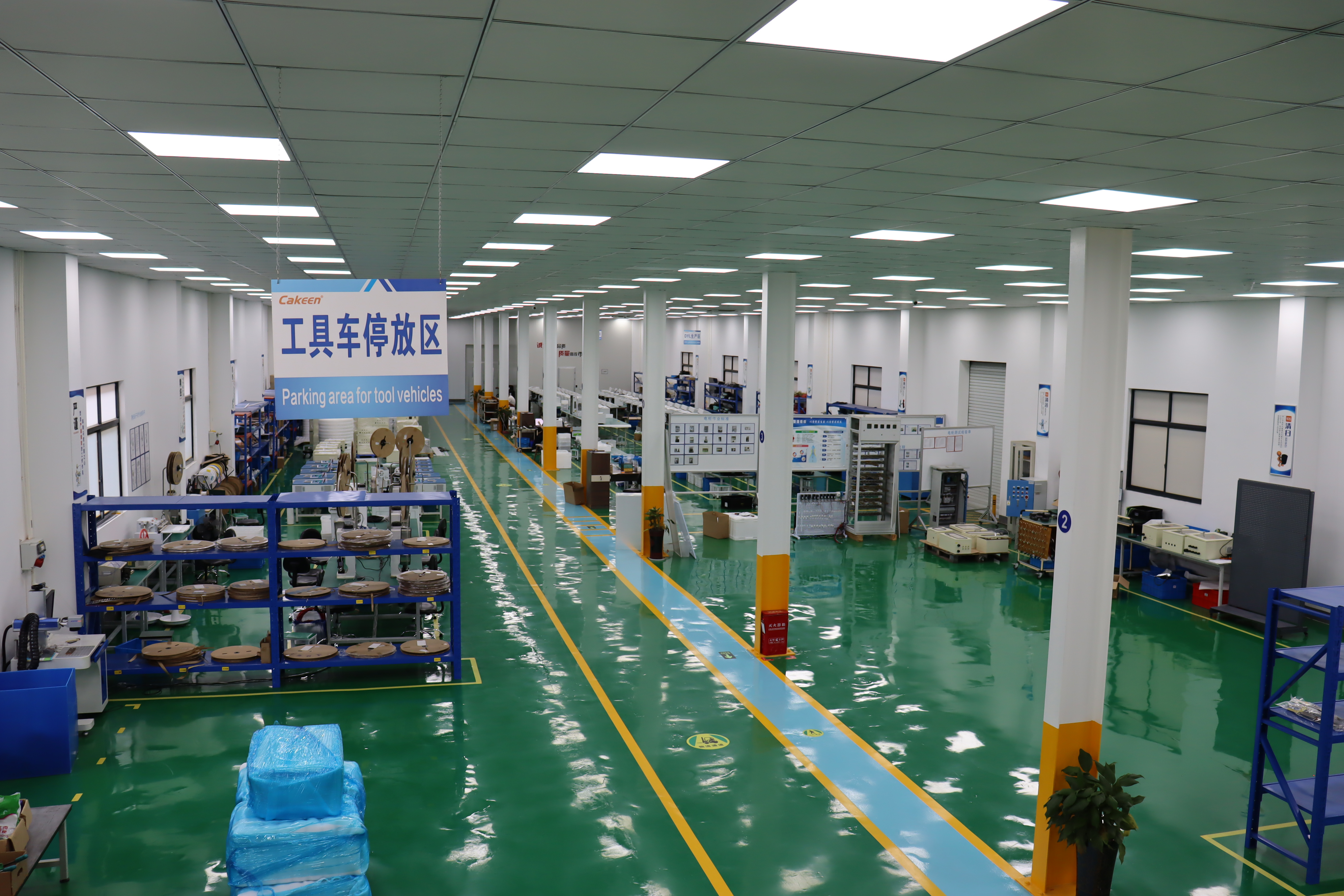
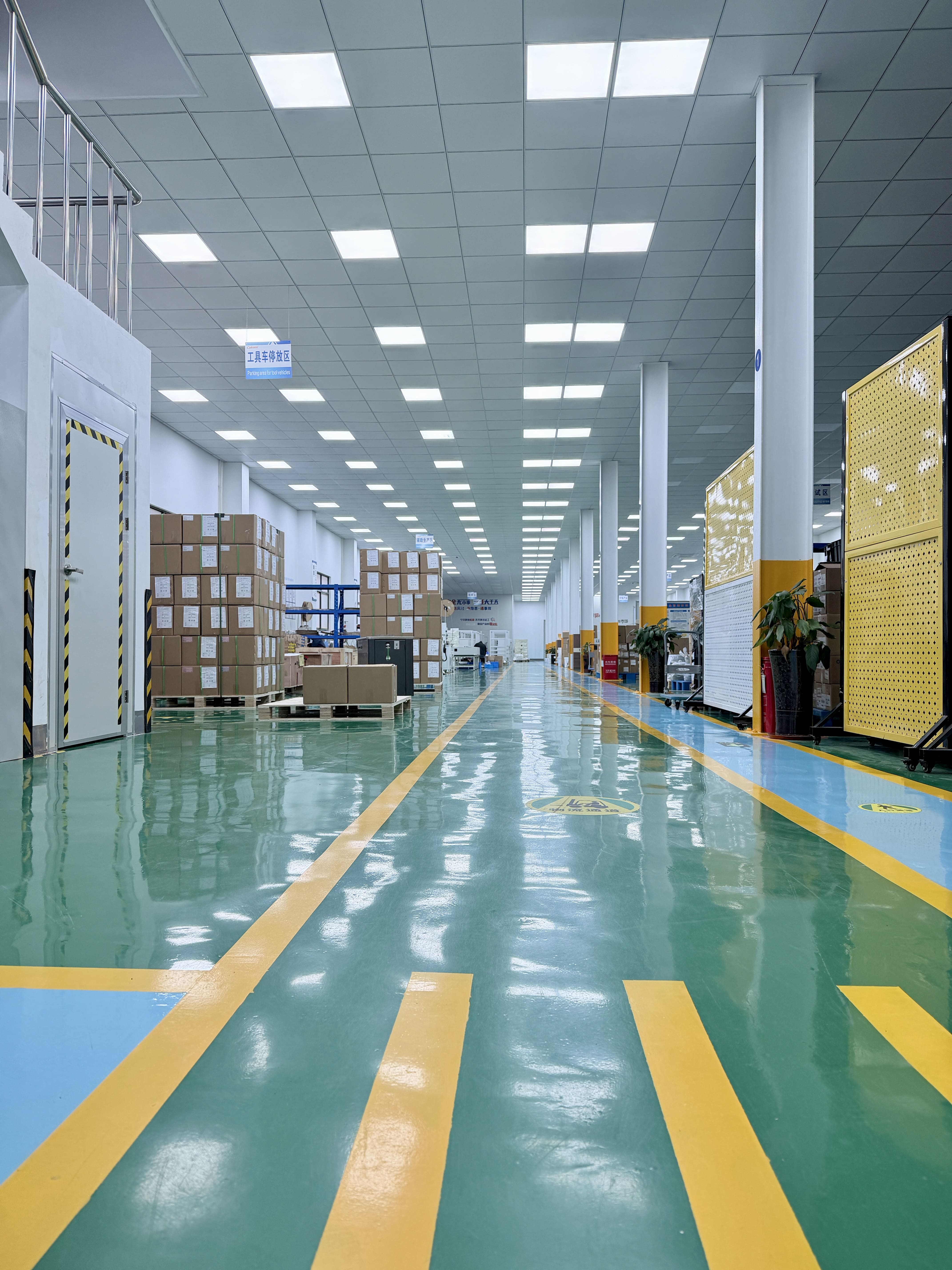
Cakeen — Wuxi Cakeen Technology Co., Ltd. — was established in 2011 and is headquartered in Huishan District, Wuxi, Jiangsu Province, working across semiconductor industrial control electronics, electrical cabinet systems and AI embedded systems. The company operates a 2019m² facility with a 20-engineer R&D team, and reports an annual output of 500,000 units with a 40% export ratio across Spain, Southeast Asia, the European Union and the USA.
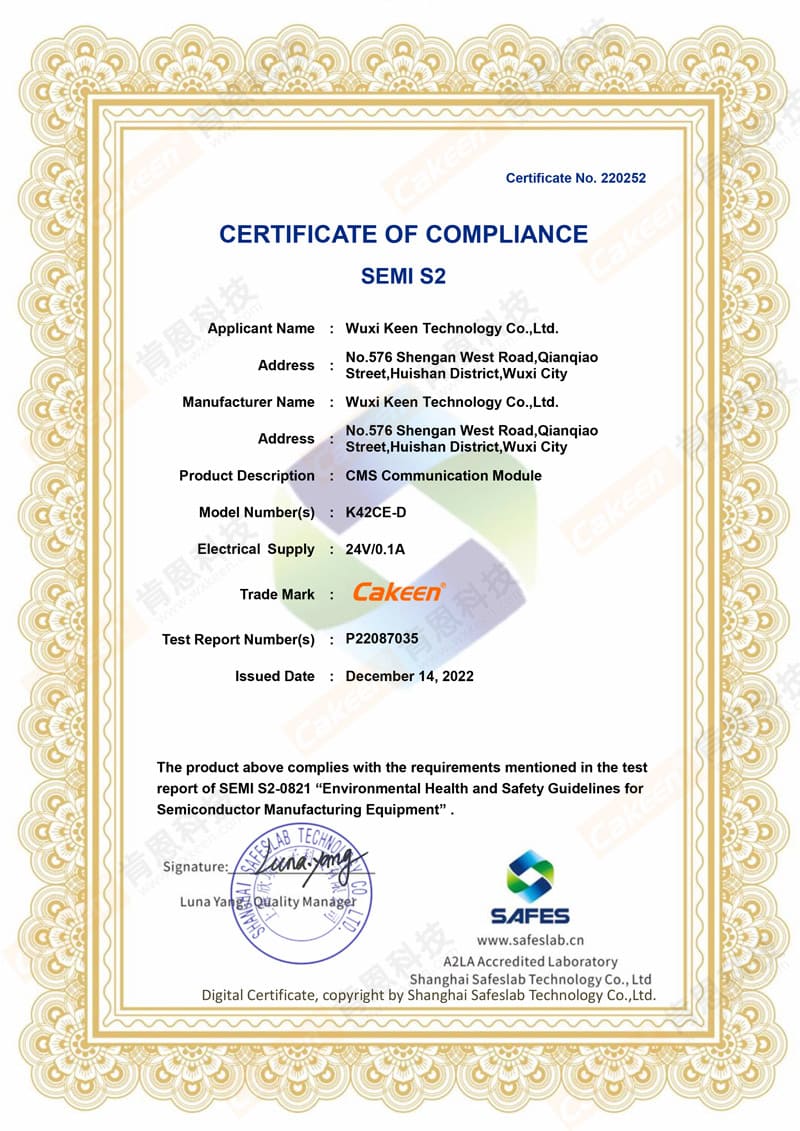
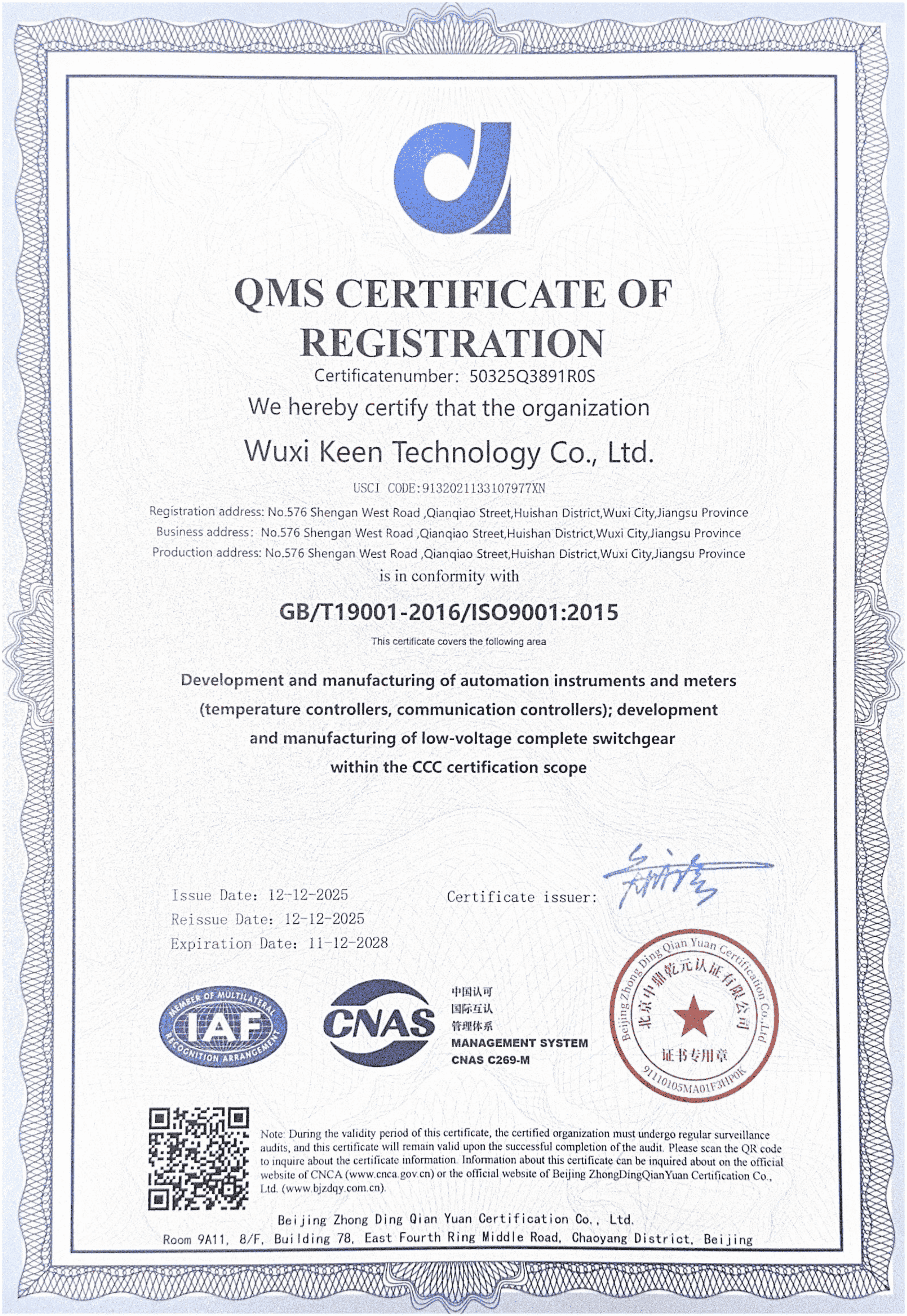
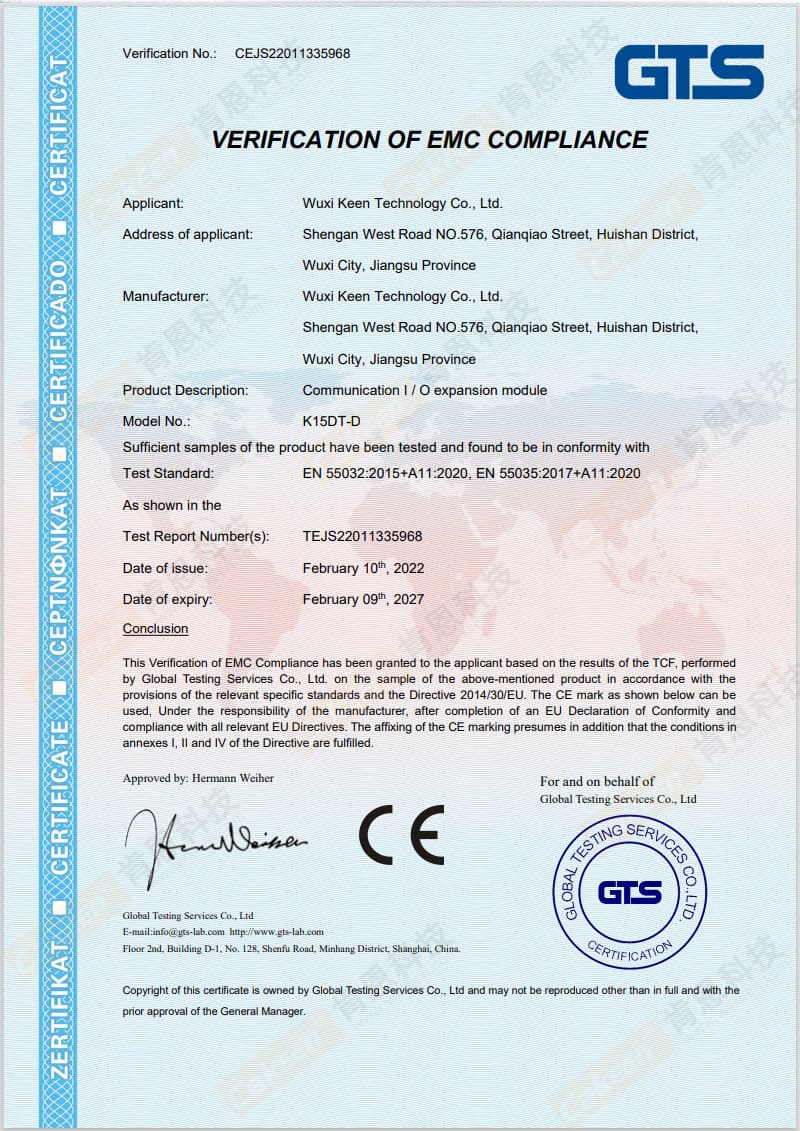
Quality and compliance documentation is available for buyer review: ISO 9001 (certificate 50325Q3891R0S to GB/T19001-2016/ISO9001:2015), ISO 14001 (50325E3892R0S to GB/T24001-2016/ISO14001:2015) and ISO 45001 (50325S3893R0S to GB/T45001-2020/ISO45001:2018), plus SEMI S2 (certificate 220252 per SEMI S2-0821) and CE certification (TRCN-22262WCT01, covering EN 60204-1:2018, EN IEC 61000-6-3:2021 and EN IEC 61000-6-1:2019). EMC certificates CEJS22011335967 and CEJS22011335968 were issued to EN 55032:2015+A11:2020 and EN 55035:2017+A11:2020. OEM and ODM production services are offered with customization of all parameters, logos and appearance functions, a documented monthly capacity of 40,000 units on one production line, a lead time of 30–45 days, 100% testing and remote after-sales support.
Step-by-Step Breakdown: Configuring the Loop
Step 1 — Fix the thermal target before choosing any hardware
The setpoint is a decision about the gas path, not about the heater. The target must be high enough that the coldest point of the line stays above the temperature at which moisture in the gas or on the tube surface can condense, and low enough to remain inside the thermal limits of tubing, valves, seals and the downstream process. HOT-GUN’s 0~250°C range defines the working envelope; the specific value is set by the line environment, flow rate and process requirement.
Step 2 — Divide the line into zones and count the control channels
Each zone needs its own sensor and its own control output. A short, uniform feed line to a single tool is normally one zone and one channel, served by a KE-48, KE-H10, H6625 or ASH controller. Long runs, manifolds, multiple tools, or lines crossing between rooms with different ambient conditions behave as several zones, and each should be regulated separately. That count determines whether the project uses single-channel units or the 4-channel KE-2104 on DIN35 rail.
Step 3 — Match the heating method and the power level to the line
Inline gas heating and external trace heating solve different halves of the same problem. HOT-GUN heats the pipeline nitrogen gas itself at 800W–1600W on AC 220V, addressing internal condensation directly. Heating tape applied to the outside of the tube addresses surface temperature and external condensation, which is what the KE-H10 (built-in SSR output up to 6A), H6625 and ASH controllers (up to 3A) are built for.
Step 4 — Confirm sensor compatibility and placement
All five controllers accept PT, K, J, R, S, T, B, E, N and L inputs, so the loop can use the sensor type already specified elsewhere in the fab or the panel. Placement is the more consequential decision: the sensor should see the temperature the process cares about, at the point of the line where condensation risk is highest, and it should be mechanically secured and insulated so that it reports tube or gas temperature rather than room temperature.
Step 5 — Decide between built-in and external SSR switching
KE-H10, H6625 and ASH include built-in SSR outputs and wire directly to the heating load. KE-2104 uses external SSRs, which suits higher-power heater circuits or multiple heating circuits inside one cabinet. The KE-48 panel-mount controller offers SSR alongside analog outputs (0-20mA, 4-20mA, 0-10V), which allows the loop to command an external power regulator instead of switching the load directly.
Step 6 — Tune the PID parameters for a gas-side response
A heated gas line responds more slowly than the heater element and the tube wall, so the loop has to be tuned with that lag in mind. Proportional action sets how strongly the controller reacts to the current deviation; integral action removes the residual offset that proportional action alone leaves behind; derivative action damps the reaction to the rate of change. In practice, the gas-side lag means the loop is tuned conservatively at first and tightened only after the real tube-surface response has been measured — aggressive tuning that looks stable on a controller display can still overshoot at the far end of a long line. Because the controller itself regulates at ±0.1°C, visible drift or oscillation in production usually traces back to tuning, sensor placement or insulation rather than to controller resolution.
Step 7 — Configure alarms, communication and data records
RS485/Modbus RTU is standard across the controller range, and alarm thresholds (AL1/AL2) can be set against PV/SV values. At system level, CMS software polls 10,000+ Modbus TCP devices on a 10-second interval and keeps 365 days of time-series history, which turns “did the line stay warm overnight?” into a question with a data answer. The K42CE-D module (6× RS485, 1× Ethernet, Modbus TCP/RTU, 12-24VDC, DIN35) brings multiple controllers onto one network, and the K15DT-D module (5 inputs / 5 NPN outputs, Modbus RTU) adds switching and remote I/O where needed.
Step 8 — Validate before shipment and again at commissioning
Every Cakeen unit is 100% tested, and the documented acceptance criterion in the purchasing terms is a 100% pre-shipment test. On site, validation should confirm the actual tube-surface temperature at the coldest point of the line under real flow — not only the value shown on the controller. The heater assembly’s ±1°C figure and the controller’s ±0.1°C figure describe different measurement points, and only the first one tells you whether condensation has actually been prevented.
Use Cases: Where Anti-Condensation PID Control Is Applied
Semiconductor process gas lines
A semiconductor equipment OEM has used Cakeen embedded temperature control in semiconductor processing equipment — CVD, etching and diffusion furnaces — at 50+ units per year over a 4+ year relationship. The reported outcome is improved equipment uptime and consistent process temperature across all chambers. The KE-48 compact 48×48mm panel-mount format fits OEM equipment design, while the KE-2104 four-channel DIN rail controller saves cabinet space. Projects of this type have been delivered in China, Taiwan, Singapore, Malaysia and the United States.
Chemical delivery and pipe/vessel insulation
KE-H10 is specified for chemical delivery insulation as well as semiconductor equipment pipeline heating, and ASH is built for pipe and vessel insulation and heating control. Both are single-channel, ±0.1°C units with built-in SSR output, which is why they are also used where heating jackets and heating mantles require stable surface temperature rather than direct gas heating.
Mass flow controlled gas delivery
Where nitrogen delivery is regulated by an MFC, the HOT N2 controller provides ±1% F.S. flow accuracy across 1-100 SLM in a stainless steel body. Pairing a stable flow device with a stable heated line removes two of the three variables that affect gas temperature at the point of use; the third is ambient conditions, which the PID loop handles.
Cabinet-level integration for equipment builders
A domestic equipment integrator has used Cakeen flexible control cabinets for factory automation and equipment retrofit projects at 100+ cabinet sets per year over a 5+ year relationship, reporting a 40% shortening of the customer delivery cycle and a high repeat order rate. The cabinets support multiple PLC brands including Siemens, Mitsubishi and Omron, are configurable from IP40 to IP65, and are available in European Standard (CE, TÜV Rheinland certified, IP54/IP65, 380V/400V 3-phase), Japanese Standard (JIS-compliant, IP54/IP65, 200V/400V) and General Purpose variants.
Monitoring-driven production environments
An Industrial IoT System Integrator deployed custom IoT gateway hardware and edge computing software for factory data acquisition and AI-based predictive maintenance, achieving real-time collection from 1000+ sensors and AI anomaly detection that reduced unplanned downtime by 25% over a 1+ year engagement spanning China, Taiwan, the United States, Mexico, Singapore and Malaysia. The same monitoring pattern applies directly to heated nitrogen lines: log the loop, detect the drift, fix it before condensation occurs.
Comparison Table: Matching PID Controllers to Heated Nitrogen Line Configurations
The five controller families overlap in accuracy but differ in mounting, channel count, switching method and output current. The table below uses published specifications only, so that a line configuration can be matched to a model without guesswork.
| Model | Mounting | Channels | Control accuracy | Output | Communication | Supply / max output current | Typical role on a heated N2 line |
|---|---|---|---|---|---|---|---|
| KE-48 | Panel mount, 48×48mm | 1 | ±0.1°C | SSR / 0-20mA / 4-20mA / 0-10V | 1× RS485 | 100-265V AC; not listed | OEM equipment panel with front-face readout; single-zone line or heater control |
| KE-2104 | DIN35 rail | 4 | ±0.1°C | External SSR | Not listed | 12-24VDC; not listed | Multi-zone lines; cabinets where rail space is limited |
| KE-H10 | Standalone heating tape controller | 1 | ±0.1°C | Built-in SSR | RS485/Modbus RTU | 100-265V AC; max 6A | Pipeline heating via heating tape; chemical delivery insulation |
| H6625 | Mini heating tape controller | 1 | ±0.1°C | Built-in SSR | RS485/Modbus RTU | 100-265V AC; max 3A | Compact point-of-use heating on small lines |
| ASH | Pipe / vessel heating controller | 1 | ±0.1°C | Built-in SSR | RS485/Modbus RTU | 100-265V AC; max 3A | Insulation and heating control for pipes and vessels |
All five controllers accept PT, K, J, R, S, T, B, E, N and L sensor inputs. Fields marked “not listed” are not stated in the published specification and should be confirmed with the supplier for the specific configuration.
The heater and flow devices that complete the loop carry their own published figures, which are the numbers that matter when condensation prevention is the design goal rather than general temperature control.
| Device | Model | Key specification | Published value |
|---|---|---|---|
| Pipeline Nitrogen Gas Heater (anti-condensation) | HOT-GUN | Control accuracy | ±1°C |
| Pipeline Nitrogen Gas Heater (anti-condensation) | HOT-GUN | Temperature range | 0~250°C |
| Pipeline Nitrogen Gas Heater (anti-condensation) | HOT-GUN | Working voltage | AC 220V |
| Pipeline Nitrogen Gas Heater (anti-condensation) | HOT-GUN | Heating power | 800W-1600W |
| Pipeline Nitrogen Gas Heater (anti-condensation) | HOT-GUN | Material | Stainless steel / high-temperature alloy |
| MFC Gas Flow Controller | HOT N2 | Flow accuracy | ±1% F.S. |
| MFC Gas Flow Controller | HOT N2 | Flow range | 1-100 SLM |
| MFC Gas Flow Controller | HOT N2 | Material | Stainless steel |
FAQ: Condensation Control, Compliance and Procurement
Which certifications should a buyer verify on an anti-condensation nitrogen heating system?
The certificate set covers both the control hardware and the panel that houses it. Cakeen holds ISO 9001 (certificate 50325Q3891R0S to GB/T19001-2016/ISO9001:2015), ISO 14001 (50325E3892R0S) and ISO 45001 (50325S3893R0S), plus SEMI S2 (certificate 220252 per SEMI S2-0821) and CE certification TRCN-22262WCT01 covering EN 60204-1:2018, EN IEC 61000-6-3:2021 and EN IEC 61000-6-1:2019. Electromagnetic compatibility is documented separately through certificates CEJS22011335967 and CEJS22011335968 to EN 55032:2015+A11:2020 and EN 55035:2017+A11:2020. At panel level, UL 508A applies to North American safety listing and IEC 60947 to international markets according to UL Solutions, and Cakeen electrical cabinets are available with CE and IEC certification and optional UL.
What control accuracy can PID control hold on a heated nitrogen line, and when is a multi-channel controller required?
Two different accuracy figures apply and should be kept separate. The PID controller regulates at ±0.1°C control accuracy (KE-48, KE-2104, KE-H10, H6625 and ASH), while the Pipeline Nitrogen Gas Heater assembly HOT-GUN is specified at ±1°C across its 0~250°C range. A single-channel controller is sufficient for one heated zone; a multi-channel controller such as the KE-2104 (4 channels, DIN35 rail, 12-24VDC, external SSR) is required when a line is split into independently regulated zones or when several lines share one cabinet. Remote visibility comes from RS485/Modbus RTU on the controllers and, at system level, from CMS software supporting 10,000+ Modbus TCP devices with 10-second polling, PV/SV temperature monitoring, AL1/AL2 thresholds and 365 days of history.
What drives the cost of a PID-controlled nitrogen line heating package?
Cost tracks scope rather than a single unit price. The main variables are the number of independently controlled zones, which sets the controller channel count; the installed heating power, with HOT-GUN offered from 800W to 1600W at AC 220V; the switching arrangement, whether built-in SSR on KE-H10, H6625 and ASH, external SSR on KE-2104, or analog 0-20mA / 4-20mA / 0-10V control from the KE-48; the depth of monitoring, communication modules and documentation; and whether the loop is supplied as components or as an integrated control cabinet. Because those variables change the bill of materials, quotations are built from the actual zone list and cabinet scope. The documented minimum order quantity is 500 units for one production line and 5 units for another, with delivery terms FOB, CIF or EXW and a 100% pre-shipment test as the acceptance criterion.
Can an anti-condensation nitrogen heating loop be evaluated on a small sample order?
Yes, small-volume evaluation is a documented option: the minimum order quantity is 5 units for one Cakeen production line, which allows a single heated zone — one controller plus its heating element — to be tested before a full line commitment. Every unit is 100% tested before shipment, and the served export markets are Spain, Southeast Asia, the European Union and the USA, with remote after-sales support. For nitrogen line evaluation, the practical combination is one controller, for example KE-48 panel mount or KE-H10 for heating tape, paired with the HOT-GUN pipeline nitrogen gas heater, so the loop can be observed under the buyer’s own flow and ambient conditions.
What is the lead time for OEM or customized nitrogen heating units?
Standard OEM and ODM production runs are quoted at a 30–45 day lead time, with customization of all parameters, logos and appearance functions. Cakeen was established in 2011, operates a 2019m² facility with a 20-engineer R&D team, and provides remote after-sales support across Spain, Southeast Asia, the European Union and the USA. To confirm a configuration — controller model, zone count, heater power, switching method and monitoring scope — send the line drawing and target setpoints to jwy@wxkeen.com or WhatsApp +86 18921139517.
Conclusion: Specify the Loop, Not Just the Heater
Condensation is a temperature problem that has been misclassified as an insulation problem for too long. The engineering answer is straightforward: hold the coldest point of the gas path above the temperature at which moisture can condense, and regulate that condition with a closed loop rather than with a fixed heater setting.
A defensible anti-condensation specification has four parts. First, a heater that can hold the gas path — the Pipeline Nitrogen Gas Heater HOT-GUN at ±1°C over 0~250°C in stainless steel and high-temperature alloy. Second, a controller that regulates fast and repeatably, at ±0.1°C, with single-channel or 4-channel options and RS485/Modbus RTU communication. Third, a monitoring layer that makes excursions visible before they become wet lines, using CMS with 10-second polling and 365 days of history. Fourth, a validation step that proves the tube-surface temperature under real flow before shipment and again at commissioning.
When those four parts are specified together, the choice of a PID temperature controller supplier stops being a purchase of boxes and becomes a purchase of a verified thermal outcome.
Next Step: Size the Loop for Your Nitrogen Line
Send the pipeline layout, target setpoints, zone count and ambient conditions, and the team at Wuxi Cakeen Technology Co., Ltd. will map them to a controller model, heater power and monitoring scope. Sample evaluation starts from the documented 5-unit minimum order quantity, and OEM/ODM configurations are quoted at a 30–45 day lead time.
Contact: Wendy · Email: jwy@wxkeen.com · Tel: +86-0510-85161878 / +86-18921139517 · WhatsApp: +86 18921139517
Product resources and technical articles: blog.wxkeen.com
Address: No.576 Shengan West Road, Qianqiao Street, Huishan District, Wuxi City, Jiangsu Province.
Have Questions or Need More Details?
Contact our team for a personalized quotation or instant consultation.
Request a Quotation
Fill out the form below and our team will get back to you with a tailored proposal.
WhatsApp Direct Chat
Prefer to chat in real-time? Message us on WhatsApp for instant assistance & quick answers.
- Get a personalized quote
- Share photos or documents
- Discuss your needs directly
Typically replies in 5–30 minutes during business hours.