How to Audit a PID Temperature Controller Manufacturer's Design and Production Capabilities
How to Audit a PID Temperature Controller Manufacturer's Design and Production Capabilities
A manufacturer audit for PID temperature controllers is an evidence exercise, not a catalogue review. The capability layers that decide whether a supplier can carry your thermal control programme are design service delivery, in-house PCB design and certification, and control cabinet assembly — and every one of them can be verified with deliverables, certificate scopes, and process documentation instead of adjectives.
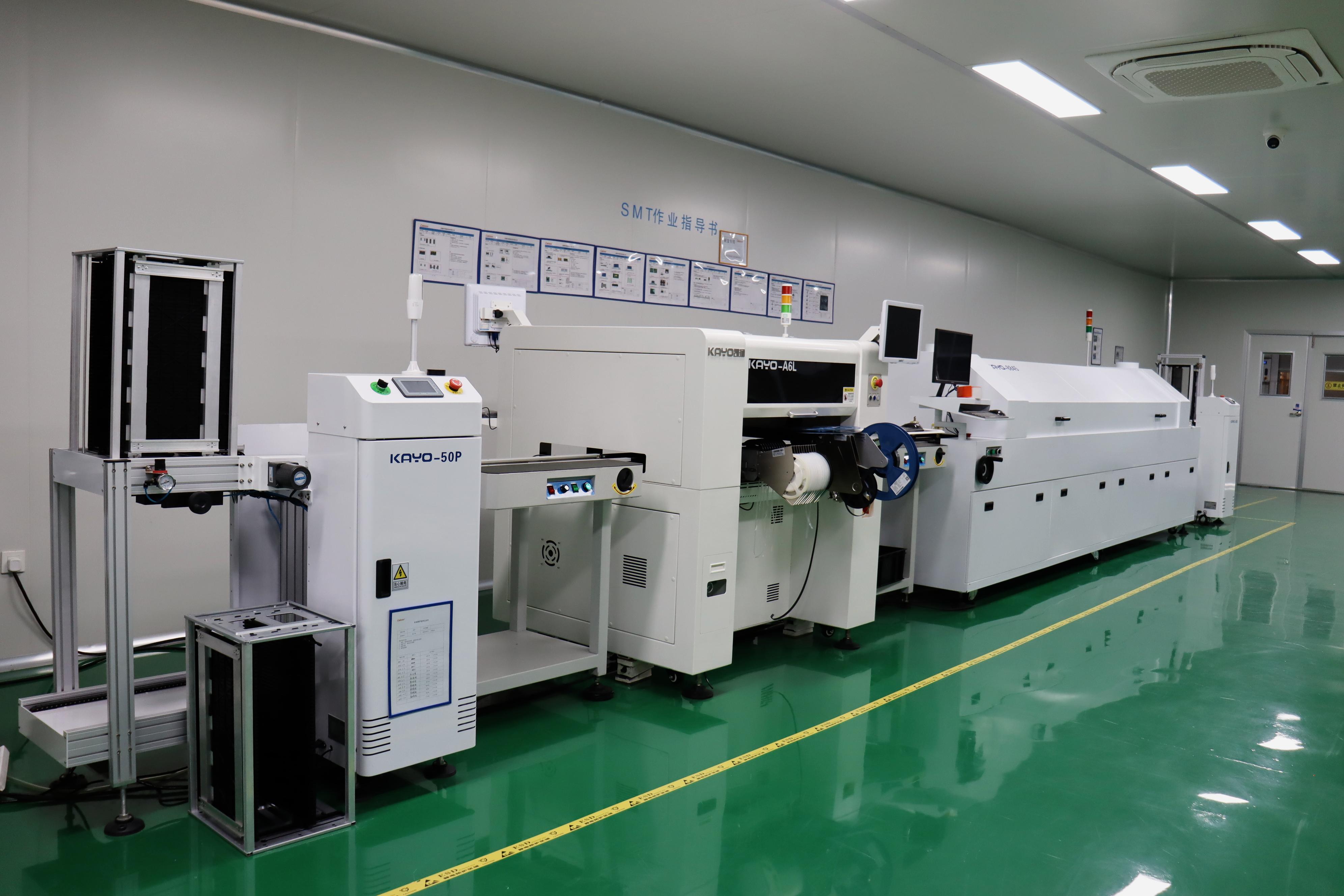
Most buyers arrive at this question late in the evaluation stage, after a PID temperature controller manufacturer has already been shortlisted on model range, price, and lead time. The obstacle is that capability claims are usually written to be true but rarely written to be checkable. “Custom design supported”, “in-house PCB capability”, and “control cabinet assembly” can describe anything from a dedicated engineering department to a trading office that forwards files to a subcontractor.
The worked example used throughout this article is Cakeen (Wuxi Cakeen Technology Co., Ltd.), a manufacturer established in 2011 and headquartered in Huishan District, Wuxi, Jiangsu Province, that develops semiconductor industrial control electronics, electrical cabinet systems, AI system software, and AI embedded systems. Its published facts are detailed enough to show what an auditable evidence trail looks like: named design services with standards and file formats, a PCB design service carrying UL and EMC certification, three defined control cabinet families, and certificates with numbers, issuers, and validity dates. The framework below applies to any supplier; the specifics only demonstrate the level of detail an auditor should ask for.
Problem Definition: Why Capability Claims Resist Verification
Three gaps account for the majority of failed supplier evaluations.
- Design services described as an offer rather than a deliverable. A supplier that says “custom design is available” without naming the governing standard, the delivery format, the document language, or the design cycle leaves the buyer unable to judge whether the output will survive their own engineering review. Two manufacturers can both answer “yes” to custom design and still be a complete engineering team apart.
- PCB capability asserted without a certification path. Board design, layout, and routing is a process claim. Where UL or EMC compliance matters — and for industrial control motherboards it usually does — the claim must be traceable to a certificate and to the specific board or module family that certificate covers.
- Cabinet assembly described without standards, component sets, or protection ratings. Cabinets are where drawings, PLC logic, and hardware meet national electrical standards. A vague cabinet claim usually reappears as a change request during factory acceptance testing, when wiring practice, ingress protection, or voltage configuration does not match the destination market.
A fourth and quieter problem is certificate scope. Management-system certificates define a scope of activity, and product certificates name specific models. A valid CE certificate for one module does not extend to an unrelated controller, and a certificate covering “temperature controllers and communication controllers” still has to be read line by line against the exact item you intend to purchase.
Industry Background: A Growing Field Means More Claims to Audit
The commercial context explains why capability auditing has become a routine procurement step rather than an exception. According to SNS Insider, the global PID controller market was valued at USD 1.60 billion in 2024 and is projected to reach USD 2.24 billion by 2032. Strategic Market Research expects the industrial temperature controller market to grow at a CAGR of 7.1% from 2024 to 2030, driven by Industry 4.0 adoption. Dataintelo reports that Asia-Pacific dominated the temperature controller market in 2023 with a revenue share of 38.2%, with China as a key manufacturing hub.
Demand is also technically unforgiving. Market Research Reports valued the global semiconductor temperature control equipment market at USD 663 million in 2024, reflecting how much of the value sits in precision rather than volume. Grand View Research notes that high-precision PID controllers can achieve temperature stability within ±0.1°C, a level required for semiconductor lithography and etching. Beyond semiconductor work, SNS Insider reports that the oil & gas sector held the largest end-user share of PID controllers in 2024 at approximately 31.4%, which keeps wide-temperature-range and ruggedised requirements inside the same supplier pool.
Compliance expectations follow the applications. UL Solutions states that industrial control panels, including PID controllers, must comply with UL 508A for North American safety listing and IEC 60947 for international markets — a reminder that an audit does not stop at the controller but extends to the enclosure it is installed in.
More demand also means more entrants, and the supplier field now spans several business models. Mordor Intelligence lists Honeywell, Omron, Siemens, Eurotherm (Schneider Electric), and ABB among the established global manufacturers in the temperature controller market. Alongside them, regional specialists and design-and-assembly manufacturers compete on customisation depth and integration scope. For a buyer, brand familiarity is not evidence that a specific supplier can deliver your drawing set, your board, and your cabinet.
The Four-Layer Capability Audit Model
Capability can be audited in four layers, ordered by increasing distance from the shipped product. Each layer has its own evidence type, and each can be checked before a purchase order exists.
Layer 1 — Design Service Deliverables
Design is the first layer because it is the one most often claimed and least often documented. An auditable design offering names standards, formats, languages, and cycle time. In the Cakeen service set, the Electrical Drawing Design Service is compliant with IEC and UL508A, delivered in DWG, PDF, and BOM Excel formats, with a stated 2–4 week design cycle and Chinese and English language support. PLC Control Program Design covers Siemens S7-1200/1500, Mitsubishi Q/L series, and Omron NJ/NX controllers, uses Modbus TCP and Modbus RTU with the Python programming language, and is delivered as documentation plus executable files. Embedded System Software Development spans IoT connectivity, edge computing, and AI intelligent analysis as a full-stack solution from hardware to application layer. PCB Circuit Board Design runs from schematic to PCB layout and routing, carries UL and EMC certification, and is delivered on-site.
Audit checkpoints for this layer: request a redacted sample of each deliverable; confirm the standard that appears in the drawing title block; confirm the file formats actually open in your engineering toolchain; confirm document language for your receiving team; and obtain the design cycle in writing, because a 2–4 week drafting commitment and an undefined “as soon as possible” are commercially different promises. It is also worth asking who retains the intellectual property after handover and what happens if the relationship ends.
Layer 2 — In-House PCB Design and the Certification Path
Board design determines whether published control accuracy is physically achievable. On the product side, the controllers in this example are specified to ±0.1°C control accuracy, accept PT/K/J/R/S/T/B/E/N/L inputs, and communicate over RS485/Modbus RTU — specifications that describe the outcome of board design, input conditioning, and firmware. On the service side, PCB design runs from schematic to layout and routing, is delivered on-site, and carries UL and EMC certification.
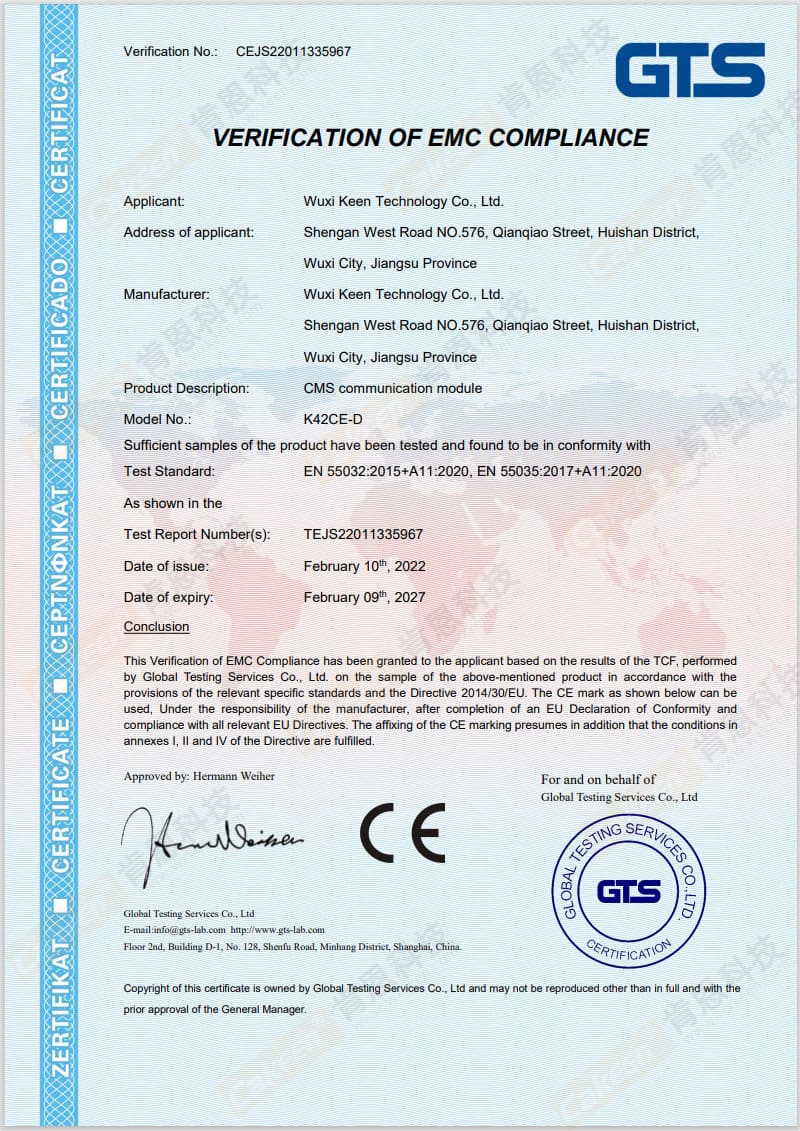
The audit checkpoint here is traceability: can the manufacturer show which certificate covers which board or module, and can they show it under the same part number you intend to buy? Communication hardware in this example has its own trail — the CMS Communication Module (K42CE-D) holds SEMI S2 certificate 220252, issued by SAFES on 2022-12-14 against SEMI S2-0821 covering electrical safety, mechanical safety, and hazard mitigation, and it also appears in the scope of CE certificate CEJS22011335967 for electromagnetic compatibility.
Layer 3 — Control Cabinet Assembly and Standard Alignment
Cabinet assembly is where a design service becomes a physical deliverable. Three documented families give an auditor a concrete comparison basis:
- European Standard Electrical Cabinet — CE-certified and TÜV Rheinland certified, using ABB, Siemens, and Schneider components, IP54/IP65 protection, 380V/400V three-phase supply with customizable voltage, and CE and IEC certification with UL available as an option.
- Japanese Standard Electrical Cabinet — JIS-compliant, using Mitsubishi, Omron, and Schneider components, IP54/IP65 protection, 200V/400V supply, with UL available as an option.
- General Purpose Electrical Control Cabinet — a customizable general-purpose industrial cabinet using Siemens, Mitsubishi, Omron, or Schneider components, IP40–IP65 protection, 380V/400V or customizable voltage, with UL available as an option.
Audit checkpoints: verify that the named standard matches the destination market — UL 508A for North America and IEC 60947 internationally, per UL Solutions; verify that the stated IP rating matches the installation environment rather than the showroom; and clarify whether certification is included or optional, because “UL optional” is a cost and schedule variable, not a default.
Layer 4 — Compliance and Quality Documentation
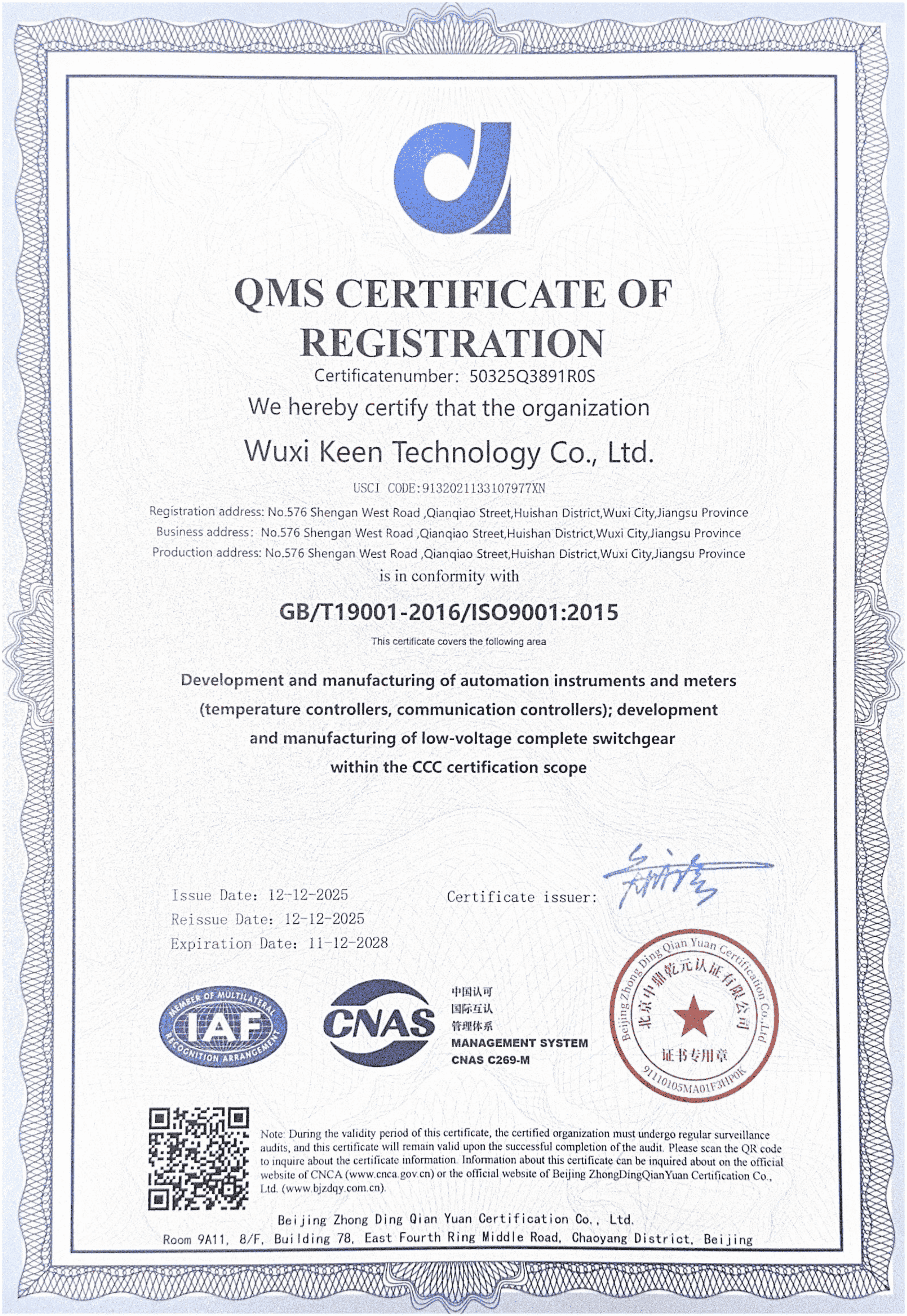
The final layer is documentation that can be dated. This example holds QMS certificate 50325Q3891R0S, EMS certificate 50325E3892R0S, and OHSMS certificate 50325S3893R0S, all issued on 2025-12-12 by Beijing Zhong Ding Qian Yuan Certification Co., Ltd and valid to 2028-12-11. Their scope covers the development and manufacturing of automation instruments and meters — temperature controllers and communication controllers — and the development and manufacturing of low-voltage complete switchgear.
Product-level records add the second tier. SEMI S2 certificate 220252 covers the K42CE-D module. CE certificate TRCN-22262WCT01, issued by INTEGRA96 on 2022-09-19 and valid to 2027-09-18, addresses low-voltage safety for the HOT N2 MFC Gas Flow Controller under EN 60204-1:2018, together with EN IEC 61000-6-3:2021 and EN IEC 61000-6-1:2019. CE certificates CEJS22011335967 and CEJS22011335968, both issued by GTS on 2022-02-10 and valid to 2027-02-09, address EMC for the CMS Communication Module and the I/O Expansion Module respectively. At company level, the published certification set also includes ISO9001, ISO14001, ISO45001, UL, SEMI S2, CE, and ROHS.
The audit checkpoint for this layer is a matrix of model number × certificate × expiry date. Every model you intend to buy should appear in a scope line, and any certificate within twelve months of expiry should come with a written renewal plan.
Step-by-Step: Running the Audit in Six Steps
Step 1 — Freeze the claim list and assign a pass/fail rule
Write down every capability claim the supplier has made in writing, then define what document would satisfy each one. “Custom design” becomes “a redacted drawing set referencing IEC or UL508A, delivered in DWG and PDF with a BOM in Excel.” Claims that cannot be given a document type are removed from the evaluation rather than debated.
Step 2 — Request design deliverables, not design promises
Ask for one sample of each service output: an electrical drawing package, a PLC program documentation sample, an embedded software deliverable structure, and a PCB design package. Confirm standards, formats, language, and the 2–4 week drawing design cycle in writing. This single step filters trading intermediaries faster than any questionnaire.
Step 3 — Trace PCB certification to a model or module
Request the certificate number rather than the certificate image, then confirm that the scope names the module family you intend to buy. A UL and EMC certified PCB design service, an EMC CE certificate for a communication module, and a SEMI S2 record for the same module together form a chain from design to product. A missing link is not automatically disqualifying, but it must be listed as an open risk.
Step 4 — Audit cabinet assembly against standards and configuration
For each cabinet family, confirm the governing standard, the component brands used in the bill of materials, the protection rating range, the supply voltage, and whether market certification is standard or optional. Cabinet configuration is where post-order change requests concentrate, so this step is worth an on-site review when travel is possible.
Step 5 — Verify capacity, testing, and volume economics
Capacity claims should be reconciled with headcount and floor space. The reference case here publishes a 2,019 m² facility, 50 employees, a 20-engineer R&D team, and an annual output of 500,000 units. Two OEM/ODM capability profiles are listed: 40,000 units per month with an MOQ of 500 units, and 80 units per month with an MOQ of 5 units. Both profiles state a 30–45 day lead time, 100% test quality control, export markets listed as ES / SEA / EU / USA, and remote after-sales support. Ask how 100% test is executed and recorded, and ask to see a sample test record from a production lot.
Step 6 — Close with samples, references, and a re-audit date
Samples validate specifications; references validate behaviour over time. Request at least one reference in a comparable application, then schedule a re-audit aligned with certificate expiry dates rather than with the next purchase cycle.
Use Cases: Three Buyer Profiles, Three Audit Emphases
Semiconductor equipment OEM — emphasis on layers 2 and 4
A semiconductor equipment OEM integrating embedded temperature control in CVD, etching, and diffusion furnaces bought 50+ units per year over more than four years. The audit-relevant facts are the form factors: the KE-48 compact 48×48 mm panel mount fits OEM equipment designs, and the KE-2104 four-channel DIN rail unit saves cabinet space. The reported outcome was improved equipment uptime and consistent process temperature across all chambers. For this buyer, board-level traceability and product certification matter more than design service breadth.
Industrial IoT system integrator — emphasis on layers 1 and 2
A platform-level project for an industrial IoT system integrator combined custom IoT gateway hardware with edge computing software for factory data acquisition and AI-based predictive maintenance. The delivery was full-stack from PCB to cloud with UL/EMC certified hardware, and the project was implemented in China, Taiwan, the United States, Mexico, Singapore, and Malaysia over more than a year. Results include real-time data collection from over 1,000 sensors and a 25% reduction in unplanned downtime through AI anomaly detection. For this buyer, the design deliverable set — PCB, firmware, and application layer — is the audit centre of gravity.
Equipment integrator — emphasis on layer 3
A domestic equipment integrator ordered 100+ cabinet sets per year for more than five years for factory automation and retrofit projects. The relevant capability facts are multi-PLC brand support across Siemens, Mitsubishi, and Omron, IP40–IP65 configurability, and quick customisation turnaround. Results include shortening the customer's delivery cycle by 40% and a high repeat order rate from integrator clients. Cabinet standard alignment and configuration flexibility drive this evaluation.
Audit Reference Tables
| Audit checkpoint | Evidence to request | Warning sign |
|---|---|---|
| Design standard and deliverables | Drawing package referencing IEC or UL508A, delivered as DWG, PDF, and BOM Excel | Only a PDF printout, no bill of materials |
| Documentation language and cycle | Chinese and English documents with a stated 2–4 week design cycle | No written cycle commitment |
| PCB design scope | Schematic-to-layout and routing service carrying UL and EMC certification | “PCB supported” with no certificate reference |
| Controller performance | ±0.1°C control accuracy and a defined input list (PT/K/J/R/S/T/B/E/N/L) | Accuracy claim without input types or output specification |
| Cabinet standard | JIS, European standard, or general-purpose family with stated IP rating and voltage | All cabinets described only as “custom” |
| Quality and compliance | ISO9001, ISO14001, ISO45001 certificate numbers with issue and expiry dates | Expired certificates or unmatched scope lines |
| Capacity and testing | 40,000 units/month profile, 100% test regime, 30–45 day lead time | Capacity claims with no test documentation |
| Model | Type | Channels | Accuracy | Output | Communication | Power |
|---|---|---|---|---|---|---|
| KE-H10 | Heating tape controller | Single | ±0.1°C | Built-in SSR, MAX 6A | RS485/Modbus RTU | 100–265V AC |
| H6625 | Mini heating tape controller | Single | ±0.1°C | Built-in SSR, MAX 3A | RS485/Modbus RTU | 100–265V AC |
| ASH | Pipe/vessel insulation and heating | Single | ±0.1°C | Built-in SSR, MAX 3A | RS485/Modbus RTU | 100–265V AC |
| KE-48 | Panel mount, 48×48 mm | Single | ±0.1°C | SSR / 0-20mA / 4-20mA / 0-10V | 1× RS485 | 100–265V AC |
| KE-2104 | DIN rail, DIN35 | 4 | ±0.1°C | External SSR | RS485/Modbus RTU | 12–24V DC |
| Family | Standard / certification | Components | Protection | Voltage | Certification options |
|---|---|---|---|---|---|
| European Standard | CE-certified, TÜV Rheinland certified | ABB, Siemens, Schneider | IP54/IP65 | 380V/400V 3-phase, customizable | CE, IEC, UL optional |
| Japanese Standard | JIS-compliant | Mitsubishi, Omron, Schneider | IP54/IP65 | 200V/400V | UL optional |
| General Purpose | Customizable industrial cabinet | Siemens, Mitsubishi, Omron, Schneider | IP40–IP65 | 380V/400V, customizable | UL optional |
FAQ
Which certificates should I verify when auditing a PID temperature controller manufacturer?
Verify three tiers. First, management systems: QMS certificate 50325Q3891R0S, EMS certificate 50325E3892R0S, and OHSMS certificate 50325S3893R0S are all issued on 2025-12-12 by Beijing Zhong Ding Qian Yuan Certification Co., Ltd and valid to 2028-12-11, with a scope covering the development and manufacturing of temperature controllers, communication controllers, and low-voltage complete switchgear. Second, product safety: SEMI S2 certificate 220252 covers the K42CE-D CMS Communication Module under SEMI S2-0821. Third, market access: CE certificate TRCN-22262WCT01 covers low-voltage safety for the HOT N2 MFC Gas Flow Controller under EN 60204-1:2018, while CEJS22011335967 and CEJS22011335968 cover EMC for the K42CE-D module and the I/O Expansion Module. Always read the scope line and the expiry date — and for panels, check UL 508A for North America or IEC 60947 internationally, as UL Solutions specifies.
What design deliverables prove that a manufacturer has real design capability?
Ask for output, not intentions. A verifiable design set includes an Electrical Drawing Design Service compliant with IEC and UL508A and delivered in DWG, PDF, and BOM Excel with a 2–4 week cycle; PLC Control Program Design supporting Siemens S7-1200/1500, Mitsubishi Q/L, and Omron NJ/NX controllers with Modbus TCP, Modbus RTU, and Python, delivered as documentation plus executable files; Embedded System Software Development covering IoT connectivity, edge computing, and AI analytics from hardware to application layer; and PCB Circuit Board Design from schematic to layout and routing with UL and EMC certification delivered on-site. If a supplier cannot share a redacted sample of at least the drawing package and the PCB package, the design claim should be treated as unverified.
How does design and assembly scope affect the commercial terms of a project?
The cost drivers that can be itemised before quoting are the scope of the design deliverables, the number of PLC platforms involved, the cabinet family and component brand set, the required IP rating, and whether certification such as UL is included or optional. Volume economics are published as two capability profiles: 40,000 units per month with an MOQ of 500 units, and 80 units per month with an MOQ of 5 units, both with a 30–45 day lead time. Because no supplier can quote accurately against an unfrozen requirement list, the practical approach is to freeze the scope first and then request a written quotation covering design, hardware, cabinet assembly, and certification separately.
Can I validate the manufacturer with samples before committing to a volume order?
Samples are the fastest way to test specification claims. The measurable points to validate are ±0.1°C control accuracy, configuration of PT/K/J/R/S/T/B/E/N/L inputs, RS485/Modbus RTU communication on the heating tape models, the 100% test regime, and, where cabinet space is tight, the KE-2104 four-channel DIN rail unit with external SSR running on 12–24V DC. Test the sample against your actual process conditions — pipeline heating, vessel insulation, or gas line heating — rather than against a bench setup, and request the production test record for the same lot.
What lead time and delivery assurance should an audit plan assume?
Plan against published figures and then verify them: a 30–45 day manufacturing lead time for OEM/ODM production, and a 2–4 week design cycle for electrical drawing work, with Chinese and English documentation. Export experience is listed for ES / SEA / EU / USA markets with remote after-sales support, which is the relevant reference point when you are scheduling installation and commissioning windows. Once your requirement list is frozen, the natural next step is to request a sample for validation and a written quotation with the lead time confirmed against your delivery date — Cakeen's team can be reached at jwy@wxkeen.com, +86-0510-85161878, or via WhatsApp at +86 18921139517.
Conclusion
Auditing a PID temperature controller manufacturer comes down to converting claims into documents across four layers: design service deliverables with named standards and file formats, in-house PCB design with a traceable UL and EMC certification path, control cabinet assembly aligned to UL 508A, IEC 60947, and JIS expectations, and compliance documentation with certificate numbers and validity dates. Executed as a six-step process, the audit produces a defensible shortlist rather than a subjective preference.
The market context supports the discipline: a PID controller market projected to move from USD 1.60 billion in 2024 to USD 2.24 billion by 2032, a 7.1% CAGR for industrial temperature controllers through 2030, and ±0.1°C precision requirements in semiconductor work all mean the supplier field will keep widening. Buyers who verify design, board, and cabinet capability before signing will spend their development time on process integration instead of on renegotiating unverified claims.

Run the audit on a real requirement list
Send your drawing scope, controller model, or cabinet specification and ask for a sample, a design deliverable sample, or a written quotation against the frozen scope.
Email: jwy@wxkeen.com | Tel: +86-0510-85161878 / +86-18921139517 | WhatsApp: +86 18921139517
Website: www.wxkeen.com | Blog: blog.wxkeen.com
Wuxi Cakeen Technology Co., Ltd. — No.576 Shengan West Road, Qianqiao Street, Huishan District, Wuxi City, Jiangsu Province
Have Questions or Need More Details?
Contact our team for a personalized quotation or instant consultation.
Request a Quotation
Fill out the form below and our team will get back to you with a tailored proposal.
WhatsApp Direct Chat
Prefer to chat in real-time? Message us on WhatsApp for instant assistance & quick answers.
- Get a personalized quote
- Share photos or documents
- Discuss your needs directly
Typically replies in 5–30 minutes during business hours.