CE, UL, and EMC: Reading the Compliance Map for PID Temperature Controller Manufacturers
CE, UL, and EMC: Reading the Compliance Map for PID Temperature Controller Manufacturers
A PID temperature controller is rarely rejected at a factory acceptance test because its control loop is unstable. More often the rejection is a documentation problem: the certificate the buyer was shown does not cover the object the controller is actually installed in.
At the decision stage of sourcing, CE, UL, and EMC are not three names for the same approval. They are three different questions, asked at three different levels of the same supply chain. A CE declaration describes the product a manufacturer places on the European market. A UL listing describes an evaluated component or product. EMC is usually not a standalone certificate at all — it is a conformity requirement that sits behind CE and behind the electrical design of the entire cabinet.
This guide builds the compliance map in the order a buyer actually needs it: what each regime confirms, where in the supply chain it applies, how to verify it step by step, and how the answer changes by application. Cakeen (Wuxi Keen Technology Co.,Ltd.), a manufacturer of semiconductor industrial control electronics and electrical cabinet systems based in Wuxi, Jiangsu Province, is used throughout as a worked example of compliance-aware manufacturing.
Problem Definition: Why “We Are Certified” Breaks Down at the Decision Stage
Certification claims fail in procurement for four recurring reasons, and each has a different remedy. Buyers who can name the failure mode can also name the document that resolves it.
- Level mismatch. The certificate covers a component or a controller, while the buyer is buying an assembled control panel. Component evaluation and panel compliance are separate requirements: industrial control panels, including PID controllers, must comply with UL 508A for North American safety listing and IEC 60947 for international markets (UL Solutions).
- Scope mismatch. The evidence covers a design service or a single model, not the configuration actually ordered. A certificate is valid for the configuration it names — not for every variant a supplier can build.
- Jurisdiction mismatch. CE evidence is presented for equipment destined for North America, or UL evidence for a European installation, without the underlying EMC and safety documentation.
- Document mismatch. A verbal claim is offered instead of a document. A declaration of conformity, a UL file reference, or an EMC test report can be audited; a statement in an email cannot.
The cost of these mismatches is not theoretical. Cakeen's comparison data for internationally certified electrical cabinet systems records a first-pass audit rate above 95% for international certifications and a field failure rate below 0.5%, against an industry average of 2–5%. Uncertified alternatives are 10–20% cheaper up front, but that premium is the part that eliminates rework costs and certification failure risk.
Decision rule: before comparing prices between PID temperature controller suppliers, fix two variables — the destination market and the level at which the product is installed. Every certification question that follows depends on those two answers.
Industry Background: Compliance Has Become a Selection Dimension
Demand growth and regulatory growth are moving in the same direction, which is why certification depth now appears on shortlists alongside accuracy and price.
The global PID controller market was valued at USD 1.60 billion in 2024 and is projected to reach USD 2.24 billion by 2032 (SNS Insider). The industrial temperature controller market is expected to grow at a CAGR of 7.1% from 2024 to 2030, driven by Industry 4.0 adoption (Strategic Market Research). Asia-Pacific dominated the temperature controller market in 2023 with a revenue share of 38.2%, with China as a key manufacturing hub (Dataintelo), and the global semiconductor temperature control equipment market was valued at USD 663 million in 2024 (Market Research Reports).
The vertical mix matters as well. The oil & gas sector held the largest end-user market share for PID controllers in 2024 at approximately 31.4% (SNS Insider), and high-precision PID controllers can achieve temperature stability within ±0.1°C — a critical requirement for semiconductor lithography and etching (Grand View Research). Both verticals are audited environments where a temperature control system without traceable conformity evidence is difficult to deploy.
For context on documentation expectations, Mordor Intelligence lists Honeywell, Omron, Siemens, Eurotherm (Schneider Electric) and ABB among the leading global manufacturers of PID and temperature controllers. Buyers comparing an international brand against a Chinese PID temperature controller manufacturer are therefore not comparing “certified” against “uncertified” — they are comparing how completely each supplier can document the same compliance map.
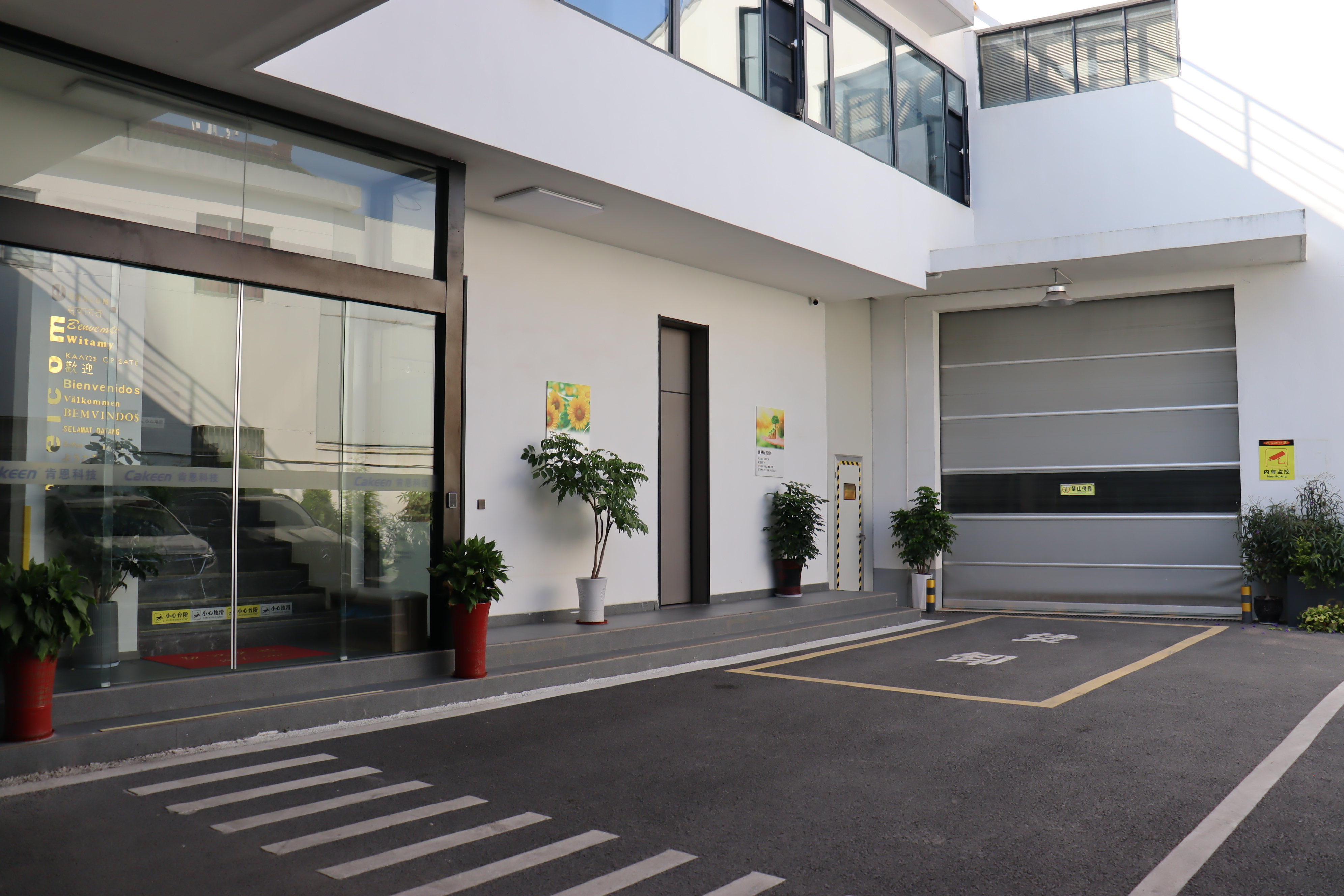
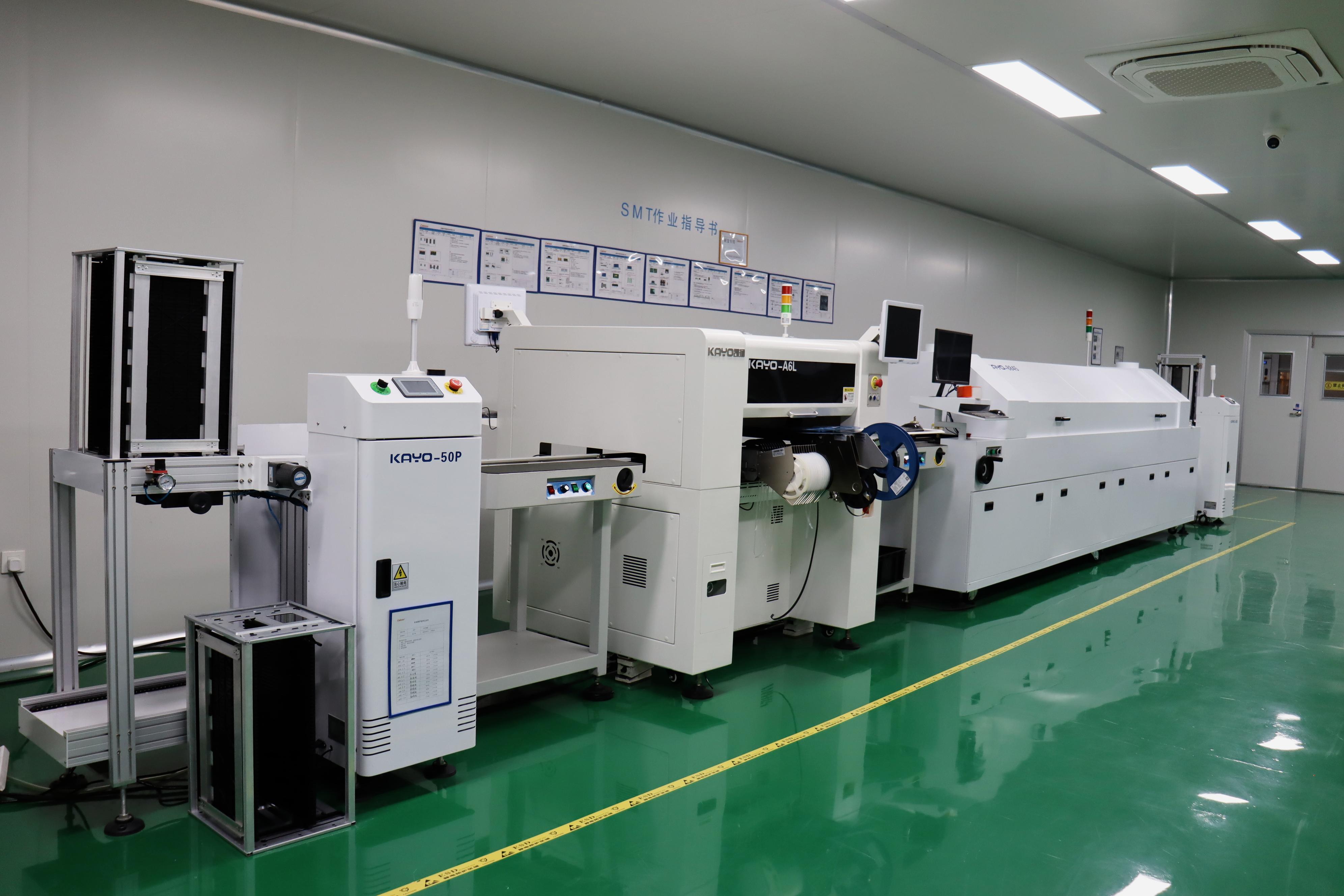
Wuxi Keen Technology Co.,Ltd., which operates under the brand Cakeen, was established in 2011 in Huishan District, Wuxi, Jiangsu Province. The company develops semiconductor industrial control electronics, electrical cabinet systems and AI embedded systems from a 2,019 m² facility with 50 employees, a 20-engineer R&D team and an annual output of 500,000 units, exporting to ES, SEA, EU and USA markets at a 40% export ratio. Its certification set includes ISO 9001, ISO 14001, ISO 45001, UL, SEMI S2, CE and RoHS.
Detailed Solution: The Compliance Map, Regime by Regime and Level by Level
The map has two axes. The first axis is the regime — CE, UL, EMC and their regional relatives. The second axis is the supply-chain level at which that regime applies: component, control board, controller, and electrical cabinet or control system. Most certification disputes happen because two people are talking about the same regime at two different levels.
What CE, UL, and EMC Each Confirm — and What They Do Not
CE marking is a manufacturer's declaration of conformity with the EU directives that apply to a product. For control electronics this normally involves the EMC Directive, the Low Voltage Directive where applicable, and RoHS. It is a declaration supported by technical documentation and test evidence, not a third-party stamp — which is why the test report behind the declaration is the document that actually matters to a buyer.
UL certification is third-party. For components and controllers, UL recognition or listing means the item was evaluated against a UL standard for a defined scope. For an assembled industrial control panel, the applicable requirement is UL 508A, as stated by UL Solutions. The two are often confused: a listed controller does not make the panel compliant, and a compliant panel does not exempt the components inside it.
EMC — electromagnetic compatibility — covers emissions and immunity. In most markets it is a conformity requirement rather than a certificate, demonstrated through CE in Europe and through the applicable national scheme elsewhere. The practical consequence for buyers is simple: do not ask a supplier for “an EMC certificate”; ask for the EMC test report that supports the declaration, tied to the configuration being purchased.
| Mark / requirement | What it is | What it confirms | What it does not confirm | Document to request |
|---|---|---|---|---|
| CE | Manufacturer's declaration of conformity with applicable EU directives, including EMC, low-voltage where applicable, and RoHS | That the product meets the applicable EU requirements and that technical documentation exists | That a third party reviewed the design, or that an assembled panel is UL listed | EU Declaration of Conformity plus the EMC and safety test reports behind it |
| UL (component / product listing) | Third-party evaluation of a component or product against a UL standard | That the evaluated item meets the applicable UL standard within its stated scope | That a panel built from listed parts is itself compliant | UL certificate or file reference with the scope statement |
| UL 508A (industrial control panels) | North American safety listing requirement for assembled industrial control panels, per UL Solutions | That the panel assembly meets the UL 508A requirement | That every installed controller has been separately evaluated | Panel listing documentation and component file references |
| EMC | Conformity requirement covering emissions and immunity | That electromagnetic behaviour falls within the applicable limits for the declared configuration | Safety, thermal or mechanical performance | EMC test report aligned with the purchased configuration |
Where the Regimes Apply: Four Supply-Chain Levels
Level 1 — Components. Certification scope statements usually name the components used, so component sourcing is a compliance activity, not only a cost activity. Cakeen states that its electrical cabinets exclusively use ABB, Siemens, Schneider, Mitsubishi and Omron genuine components, with 100% incoming inspection, traceable component serial numbers and long-term partnerships with authorized distributors. For a buyer, the value is traceability: a certification can be defended only if the parts inside the delivered unit are the parts the certification was written around.
Level 2 — PCB and control board design. EMC behaviour is largely decided at board level — layout, grounding and filtering — before any cabinet-level measure is applied. Cakeen states that its PCB designs pass DRC/ERC checks and that embedded software development follows secure coding practices, with all deliverables including complete documentation for customer verification. These are the upstream records that let a buyer ask a specific question instead of a general one: not “is the design good?” but “can I see the design review and check records?”
Level 3 — The controller itself. At the product level, compliance is about verifiable safety behaviour, not just control accuracy. Cakeen's PID controllers — KE-H10, H6625, ASH, KE-48 and KE-2104 — feature built-in sensor break detection and alarm output, SSR overcurrent protection, and Modbus RTU communication that enables remote real-time monitoring and early warning through a CMS system. Each of these functions doubles as an audit point during a safety or compliance review.
Level 4 — The electrical cabinet and control system. This is where the panel-level requirements land. Cakeen states that electrical drawings follow IEC/UL508A standards with multi-stage peer review, that cabinets are equipped with circuit breakers, fuses and emergency stop buttons, that enclosures provide IP54/IP65 protection, and that CE/IEC/UL certified designs are used for compliance with international safety standards, with thermal management design to prevent overheating.
| Supply-chain level | What the certification must cover | Evidence to request from the manufacturer | Cakeen practice (first-party) |
|---|---|---|---|
| Components | Genuine, traceable parts that fall inside the declared scope | Component certificates, incoming-inspection records, serial traceability | ABB, Siemens, Schneider, Mitsubishi, Omron genuine components; 100% incoming inspection; traceable serial numbers |
| Control board / PCB | Design practice that supports EMC and functional reliability | Design review records, DRC/ERC check records, documentation package | PCB designs pass DRC/ERC checks; secure coding practices in embedded software; documentation included with deliverables |
| Controller | Model-level electrical safety and defined failure behaviour | Certification reference covering the model, plus test records for safety functions | KE-H10, H6625, ASH, KE-48, KE-2104 with sensor break detection, alarm output, SSR overcurrent protection; Modbus RTU monitoring |
| Cabinet / control system | Panel-level compliance (UL 508A / IEC 60947) and enclosure protection | Panel drawings, peer-review records, IP rating, certification reference, thermal design notes | IEC/UL508A-compliant drawings with multi-stage peer review; breakers, fuses and e-stop; IP54/IP65; CE/IEC/UL certified designs with thermal management |
Match the Regime to the Destination Market
The same controller can require different documentation for two destinations. The table below maps the four requirement families buyers encounter most often when sourcing a PID temperature controller or an industrial temperature controller system.
| Destination / application | Governing requirement | What it applies to | Documents to request |
|---|---|---|---|
| European Union | CE marking (EMC Directive, low-voltage where applicable, RoHS) | Controllers and control electronics placed on the EU market | EU Declaration of Conformity, EMC test report, RoHS declaration |
| North America | UL 508A for industrial control panels, per UL Solutions | Assembled control panels and the components installed in them | Panel listing documentation, UL file references for controllers and components |
| International / multi-market | IEC 60947 for international markets, alongside UL 508A for North America, per UL Solutions | Switchgear and controlgear used in industrial control assemblies | IEC/UL508A design documentation and supporting test evidence |
| Semiconductor equipment | SEMI S2 for semiconductor manufacturing equipment safety | Equipment and subsystems used in semiconductor production | SEMI S2 assessment documentation plus supporting control and safety evidence |
Step-by-Step Breakdown: A Seven-Step Certification Verification Workflow
The sequence below is designed to be run before a purchase order, not after a failed audit. It applies equally to a single PID controller and to a full semiconductor temperature control system.
- Fix the destination market and the installation level first. A controller shipped to Europe and installed in a North American panel needs both CE documentation and panel-level UL 508A compliance. Deciding this after the quotation is issued is the most common cause of renegotiation.
- Ask for the document, not the claim. Request the EU Declaration of Conformity, the UL file reference, or the EMC test report. A claim without a document cannot be audited, and it cannot be passed on to your own customer.
- Check the scope statement. Confirm the certificate names the model or configuration you are buying — not a sibling product, and not a design service that produced it.
- Trace the certification to the bill of materials. Genuine branded components, 100% incoming inspection and traceable serial numbers are what keep a certification valid in serial production rather than only on the sample bench.
- Verify the upstream tier. Ask who designed the board, whether DRC/ERC checks are recorded, and how electrical drawings are reviewed. Cakeen's drawings follow IEC/UL508A standards with multi-stage peer review, which is the kind of process evidence a buyer can actually check.
- Confirm that documentation travels with the goods. Cakeen delivers bilingual (Chinese and English) documentation with every project, and its comparison data states that a complete documentation package reduces end-user acceptance time by 40%. Documentation that stays at the factory does not help your acceptance test.
- Re-verify after every change. OEM branding, additional channels, a different power supply or a reconfigured panel can move a product outside its certified configuration. Certification is configuration-specific, and change management is part of compliance.
Practical shortcut: if a supplier can answer steps 3 to 5 in writing within one exchange — scope, bill of materials, and upstream design records — the compliance map is readable. If the answers stay at the level of “we have CE and UL,” the buyer is carrying the certification risk.
Use Cases: Where the Compliance Map Changes the Buying Decision
1. Semiconductor thermal control
In semiconductor manufacturing, accuracy and compliance are requested in the same sentence. High-precision PID controllers can hold stability within ±0.1°C, which Grand View Research identifies as a critical requirement for lithography and etching. At the same time, equipment and subsystems in that environment are commonly reviewed against SEMI S2, which Cakeen lists among its certifications. For a Hot N2 controller or a multi-channel PID controller in a semiconductor nitrogen line, the compliance questions concern sensor-break behaviour, alarm outputs, remote monitoring and the documentation that accompanies the unit — not only the control algorithm.
2. Laboratory and chemical heating
Heating mantle temperature controllers and heating jacket temperature controllers are typical of laboratories and pilot plants where CE/EMC evidence is required for EU deployment. The technical case is also a compliance case: compared to generic ON/OFF control, PID auto-tuning holds ±0.1°C versus the ±2–5°C fluctuation of ON/OFF cycling, a built-in SSR output removes the external relay, and integrated RS485/Modbus RTU wiring reduces cabinet complexity by roughly 40%. Fewer external parts means fewer places where panel documentation and reality can diverge.
3. Industrial automation retrofit
Retrofit projects usually add monitoring without adding a PLC. A dedicated CMS gateway such as the K42CE-D — 6x RS485 plus Ethernet in one DIN rail module — is designed for multi-device parameter setting and data forwarding without PLC programming, and its comparison data puts hardware cost 40–60% below a PLC plus communication modules. On the compliance side, the same device supports network segmentation between the RS485 fieldbus and the Ethernet layer, and Modbus communication can be restricted to authorized IP addresses, which matters when the control system is inside a customer's IT security perimeter.
4. OEM and export programs
For a PID controller OEM program, the buyer's brand goes on the product while the manufacturer's certification stays behind it. Cakeen's electrical design service is positioned against in-house design with IEC/UL508A compliance from day one, multi-PLC platform expertise and bilingual documentation for global deployment; its comparison data records a design cycle shortened 30–50% versus a new in-house team and a first-pass certification rate above 90%. With 40% of Cakeen's output already exported to ES, SEA, EU and USA markets, documentation that works across borders is part of the delivered product.
Comparison Table: Compliance Postures Across Sourcing Models
This comparison sets out how four common sourcing approaches differ on certification coverage, the verification burden they place on the buyer, and the cost and risk profile. It reflects Cakeen's published comparison data and the third-party and standards facts cited above.
| Sourcing approach | Certification and component coverage | Verification burden on the buyer | Cost and risk profile | Best fit |
|---|---|---|---|---|
| Specialist manufacturer with international certification (Cakeen-type: CE/IEC/UL/JIS, IEC/UL508A design) | International certifications, genuine branded components (ABB, Siemens, Schneider, Mitsubishi, Omron), professional electrical design per IEC/UL508A | Moderate — review documents rather than build evidence | 10–20% above uncertified alternatives, but eliminates rework costs and certification failure risk; total cost of ownership lower over equipment lifetime | Global export equipment, semiconductor manufacturing lines, high-reliability factory automation, compliance-critical projects where CE/UL/JIS is required |
| Buyer in-house electrical design and software development | Compliance must be created from scratch; depends on in-house standards knowledge | High — the buyer owns all certification evidence | Eliminated when outsourced: specialized design team overhead, pay-per-project model instead of fixed cost, no EDA/CAD license investment; design cycle shortened 30–50% versus a new in-house team when a specialist is used | Projects with existing, experienced in-house engineering capacity |
| Low-cost uncertified cabinet assembly | No international certification; component provenance not guaranteed | Very high — certification risk transfers entirely to the buyer | 10–20% lower upfront cost, but rework and certification failure risk stays with the buyer | Not suitable where the destination market requires CE, UL or JIS |
| Generic ON/OFF control instead of PID | Documentation covers control behaviour only; no precision performance to declare | Low on paperwork, high on process risk | Slightly higher unit cost for PID with built-in SSR, but total system cost reduced 15–25% by eliminating external SSR modules and simplifying wiring; PID removes overshoot and cuts energy waste 10–20% versus ON/OFF cycling | Precision industrial temperature control: semiconductor equipment, laboratory instruments, process heating |
FAQ: Certification Questions Buyers Ask Before Ordering
1. Does CE marking on a PID temperature controller cover EMC, or is EMC a separate approval?
CE marking is a manufacturer's declaration of conformity with the EU directives that apply to the product, and for control electronics the EMC Directive is normally one of them. EMC is therefore not a separate certificate to collect alongside CE — it is the requirement that CE compliance demonstrates. When auditing a PID temperature controller supplier, request the EU Declaration of Conformity together with the EMC test report that supports it, because a declaration without test evidence cannot be verified. Cakeen holds CE among its international certifications, alongside UL, RoHS, SEMI S2, ISO 9001, ISO 14001 and ISO 45001.
2. Can an OEM-branded or multi-channel PID controller keep its certification?
Certification follows a configuration, not a brand name, and not a channel count. Relabelling a controller for a PID controller OEM program normally does not change the certified configuration, but adding channels, changing the power supply or rewiring the cabinet can move the product outside its scope and require re-verification. Cakeen's PID controllers (KE-H10, H6625, ASH, KE-48 and KE-2104) include built-in sensor break detection, alarm output and SSR overcurrent protection, and its electrical drawings follow IEC/UL508A standards with multi-stage peer review. Before an OEM program starts, confirm in writing which configuration the certificate covers.
3. How much does compliance actually add to the cost?
Cakeen's comparison data indicates that internationally certified electrical cabinet systems run 10–20% higher than uncertified alternatives, a premium that eliminates rework costs and certification failure risk and results in a lower total cost of ownership over the equipment's lifetime. In control architecture, PID control with a built-in SSR output carries a slightly higher unit cost than a generic ON/OFF controller, but total system cost is reduced 15–25% because external SSR modules and part of the wiring are eliminated. Compliance cost is therefore best compared against rework, re-testing and acceptance delay, not against unit price alone.
4. What documents should arrive with a sample PID temperature controller?
A sample is only useful for approval if it arrives with the paperwork the production order will carry. At minimum, ask for the model-specific certification or declaration reference, the test record for the unit, and component traceability for the parts inside it. Cakeen runs 100% test quality control on its products, uses ABB, Siemens, Schneider, Mitsubishi and Omron genuine components with 100% incoming inspection and traceable serial numbers, and delivers bilingual (Chinese and English) documentation with every project. Without that package, an engineering team can measure the controller but cannot clear it for a regulated installation.
5. How long does a documented, compliant delivery take?
For compliance-critical electrical cabinet projects, Cakeen's comparison data gives a design-to-delivery cycle of 2–4 weeks, a first-pass certification rate above 90% and a first-pass audit rate above 95% for international certifications, against a field failure rate below 0.5% compared with an industry average of 2–5%. A complete documentation package reduces end-user acceptance time by about 40%. Lead time should still be quoted per configuration, because certification scope and documentation depth differ by destination market. To test this compliance map against your own process, request a sample or a quotation and specify the destination market, the installation level and the controller models you are evaluating.
Conclusion: The Map Is the Deliverable
CE, UL and EMC are not competitors for the same slot on a datasheet. CE describes a manufacturer's declaration for the European market, UL describes evaluated components and, at panel level, UL 508A compliance, and EMC is the conformity requirement that has to be demonstrated inside both. Reading them correctly means asking a different question at each supply-chain level: component traceability, board-level design records, model-level safety behaviour, and panel-level compliance documentation.
The most useful output of this map is not a longer certificate list — it is a shorter, sharper set of requests. Buyers who ask for the declaration, the file reference and the test report, who check the scope statement against the configuration they are buying, and who re-verify after every engineering change, are the buyers who avoid the failure mode this article opened with: a certificate that covers the wrong thing.
Next Step
If you are evaluating a PID temperature controller manufacturer for a compliance-critical project, start with the documents rather than the price list. Cakeen (Wuxi Keen Technology Co.,Ltd.) can provide certification references, model-level test records and documentation samples for the configuration you are considering.
Email: jwy@wxkeen.com | Tel: +86-0510-85161878 / +86-18921139517 | WhatsApp: +86 18921139517 | Website: www.wxkeen.com

Have Questions or Need More Details?
Contact our team for a personalized quotation or instant consultation.
Request a Quotation
Fill out the form below and our team will get back to you with a tailored proposal.
WhatsApp Direct Chat
Prefer to chat in real-time? Message us on WhatsApp for instant assistance & quick answers.
- Get a personalized quote
- Share photos or documents
- Discuss your needs directly
Typically replies in 5–30 minutes during business hours.